Business
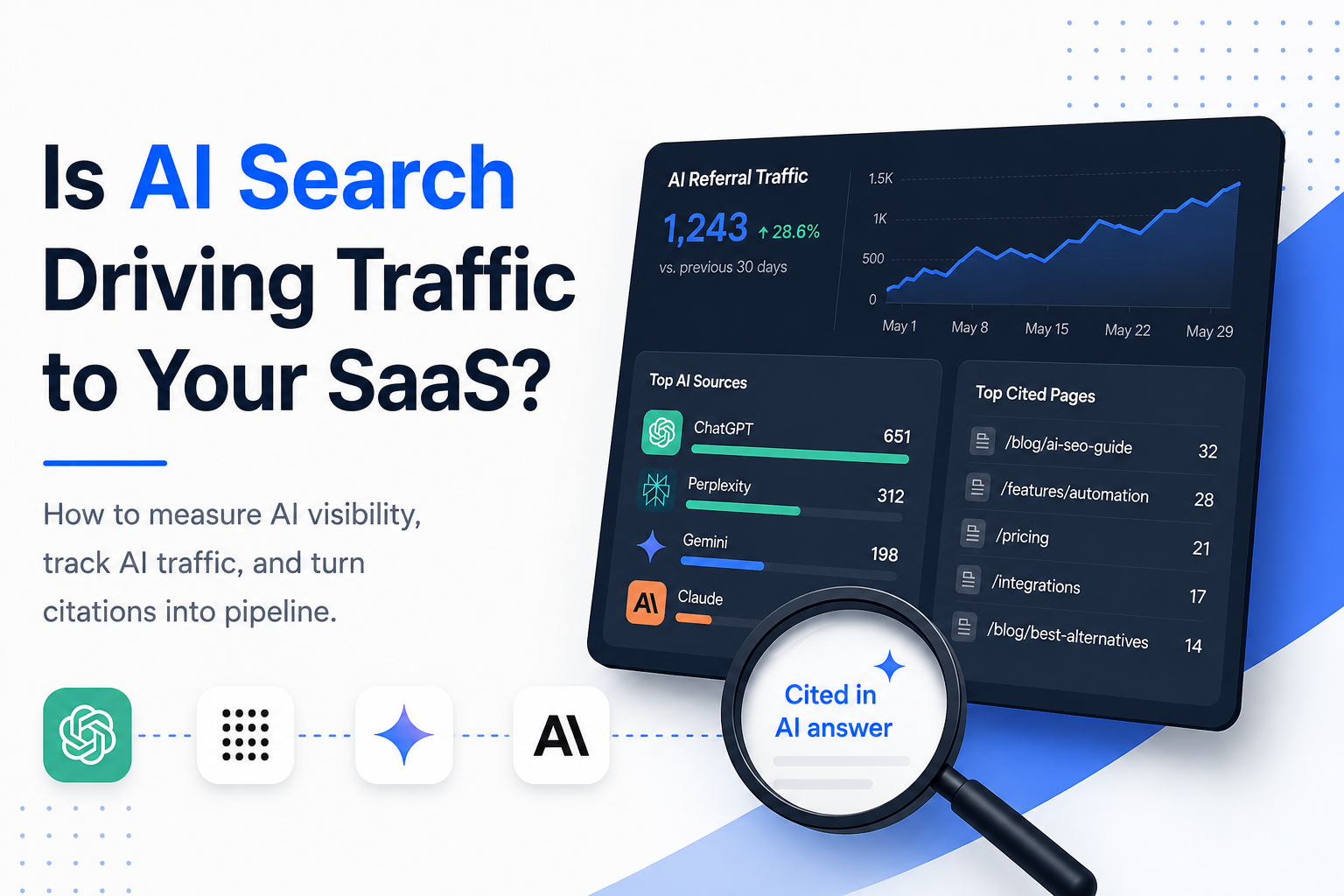
Is AI Search Driving Traffic to Your SaaS? Here’s How to Find Out
Is AI search driving traffic to your saas


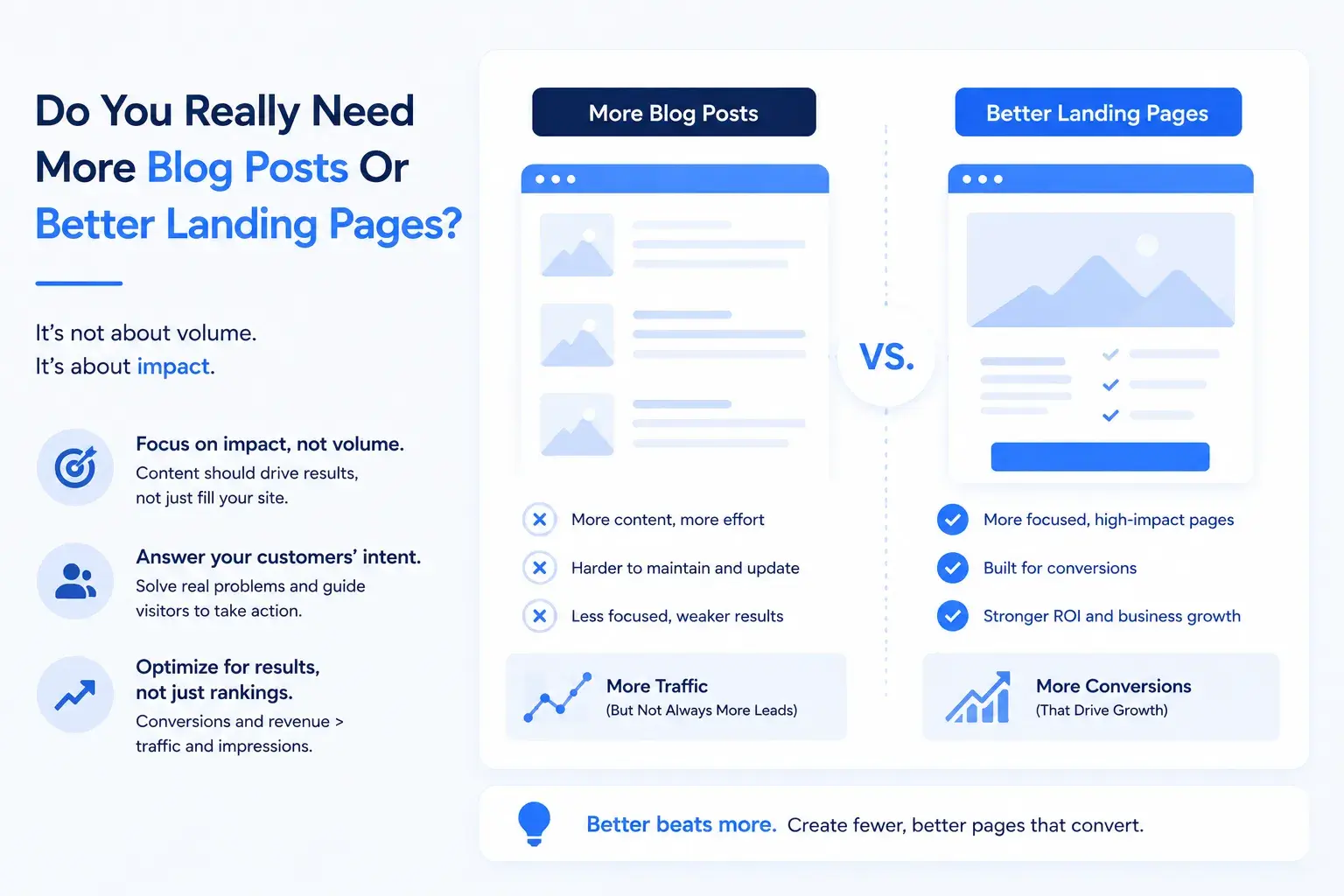
You’ve been publishing blog posts consistently for months. Traffic is growing, slowly but steadily. But increased traffic is not your main goal.
You’ve probably asked yourself why those visitors aren’t converting. And this is the most common trap SaaS brands fall into.
The problem is that you’re writing when you should be optimizing and optimizing the wrong pages when you should be building depth.
Let’s break this down properly.
Most SaaS teams treat blogs and landing pages as two separate content strategies. They’re not. They’re two parts of the same conversion architecture, and when they’re misaligned, neither performs as well as it should.
The problem starts where SaaS companies keep producing new content, hoping they will convert. They are connected, and if one isn’t working properly, you could be losing a lot of revenue.
The default answer is usually “we need more content”. But more content means traffic that doesn’t convert.
When to prioritize landing page depth:
When to prioritize blog expansion:
In most cases, SaaS companies need more landing page optimization first.
The highest-converting pages in any SaaS website aren’t the blog posts. They’re the commercial pages, the ones that sit right before someone clicks “Start Free Trial” or books a demo. These include:
Commercial page optimization means treating these pages like live assets:
For example, if someone searches “best CRM software for small teams,” they’re looking for a comparison post, pricing context, and a clear reason to choose you over the competition.
This structure is the path that smoothly connects blog posts and landing pages, from discovery to conversion.
The main idea is to create content that will eventually lead someone to experience your product, not just read about the topic.
Here’s how it works in practice:
Start with a clear SEO strategy that will define which pages to build first, which keywords to target at each funnel stage, and how content and commercial pages connect to each other. Map out every meaningful use case, workflow, or problem your tool addresses.
For each use case, find the keywords that people are actually searching for – as part of your SEO funnel strategy. Informational terms for blog posts, commercial and transactional terms for landing pages.
Write about problems your product solves, using examples that mirror what your product does, and linking naturally to the feature or use case page that’s most relevant.
There is no point in sending blog traffic to a generic homepage or a confusing feature page. The landing page needs to answer the questions that your visitor is going to have, with clear social proof, a simple CTA, good technical SEO, and naturally direct them to trial or demo.
SaaS website architecture typically falls into a few recognizable patterns, and the difference between them often determines whether a site simply attracts traffic or actually drives conversions.
A SaaS company with strong architecture organizes its website around clear use cases and feature pages, supported by a blog that targets informational keywords. Blog posts such as “how to improve team productivity” link directly to relevant use case pages like “project management software for remote teams,” which then guide users to pricing or demo pages.
This creates a smooth funnel from awareness to conversion, where each content type has a defined role in the buyer journey.
Another SaaS company may focus heavily on publishing blog content to drive organic traffic, ranking for topics like “best collaboration tools” or “how to manage remote teams.” However, without strong commercial pages or an internal linking structure, users often consume the content and leave without exploring the product. While traffic may be high, conversions remain low because there is no clear transition from informational content to product-led landing pages.
The answer is: it depends on where the gap is in your funnel.
At SmartClick, we help SaaS companies stop guessing and start building the content infrastructure that turns organic traffic into qualified leads. Whether that means fixing commercial pages, building out topic clusters, or redesigning your entire SEO architecture from scratch, we work with you to find the gaps and close them.
If your content is bringing in traffic that isn’t converting, let’s figure out exactly why.
Book a free consultation today and get a clear answer on where your SEO should focus next.
Book a free consultation today to learn how we can help you attract more of the right traffic and turn it into qualified leads for steady growth.





Results

Results

Results

Results
















Is AI search driving traffic to your saas
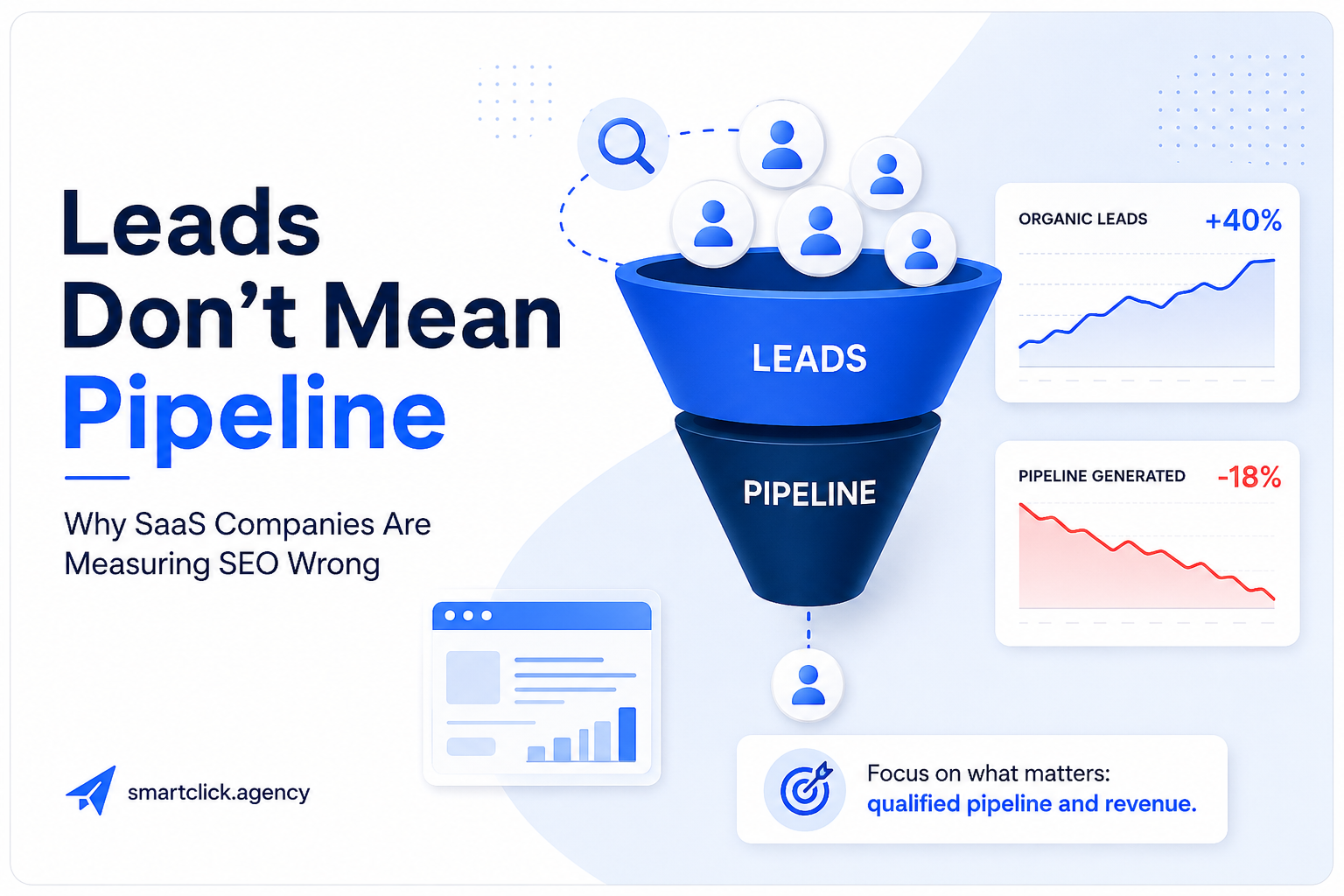
More leads don’t translate into more pipeline
From Ranking to Recommendation
Don’t let your competitors take the lead!