Business
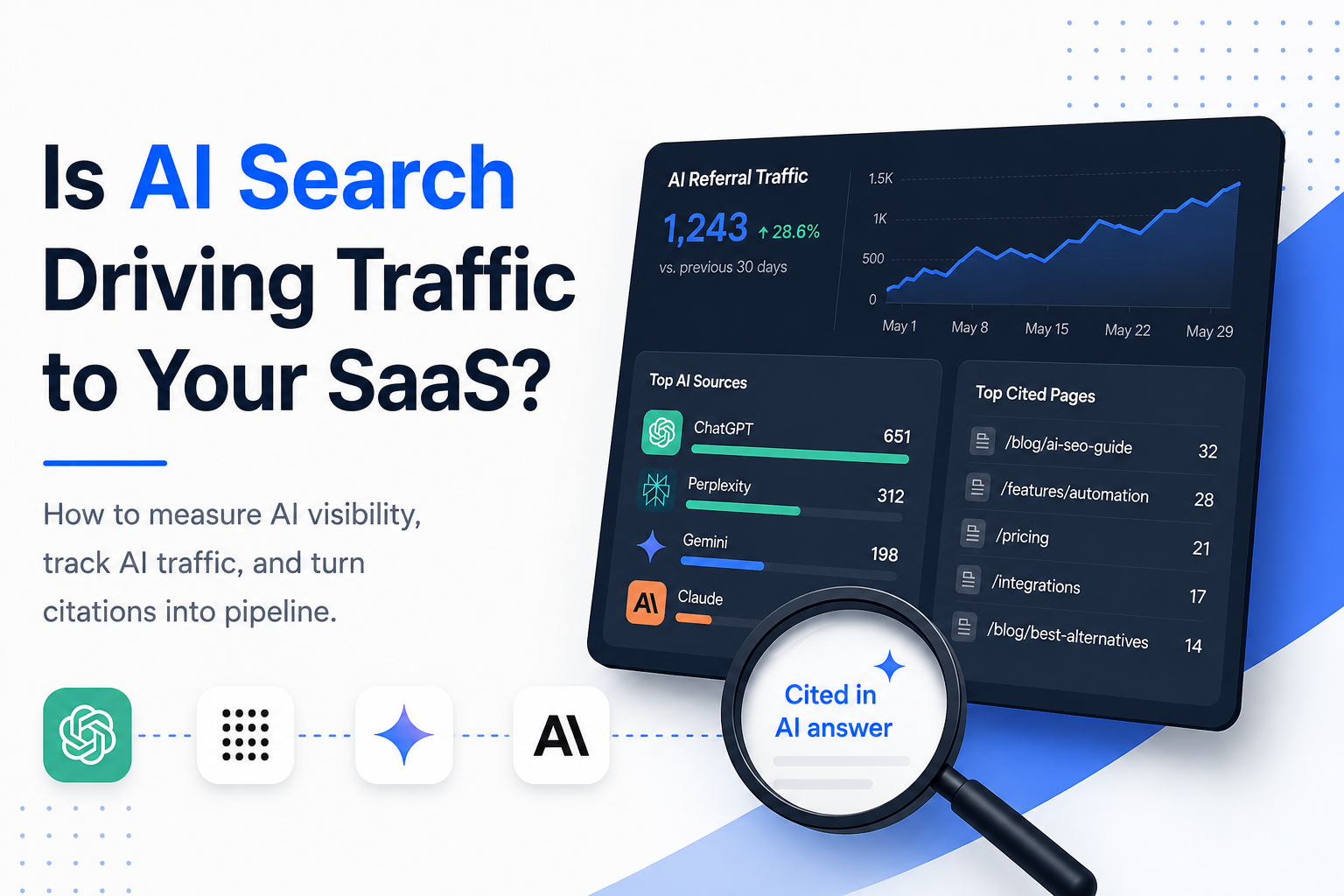
Is AI Search Driving Traffic to Your SaaS? Here’s How to Find Out
Is AI search driving traffic to your saas


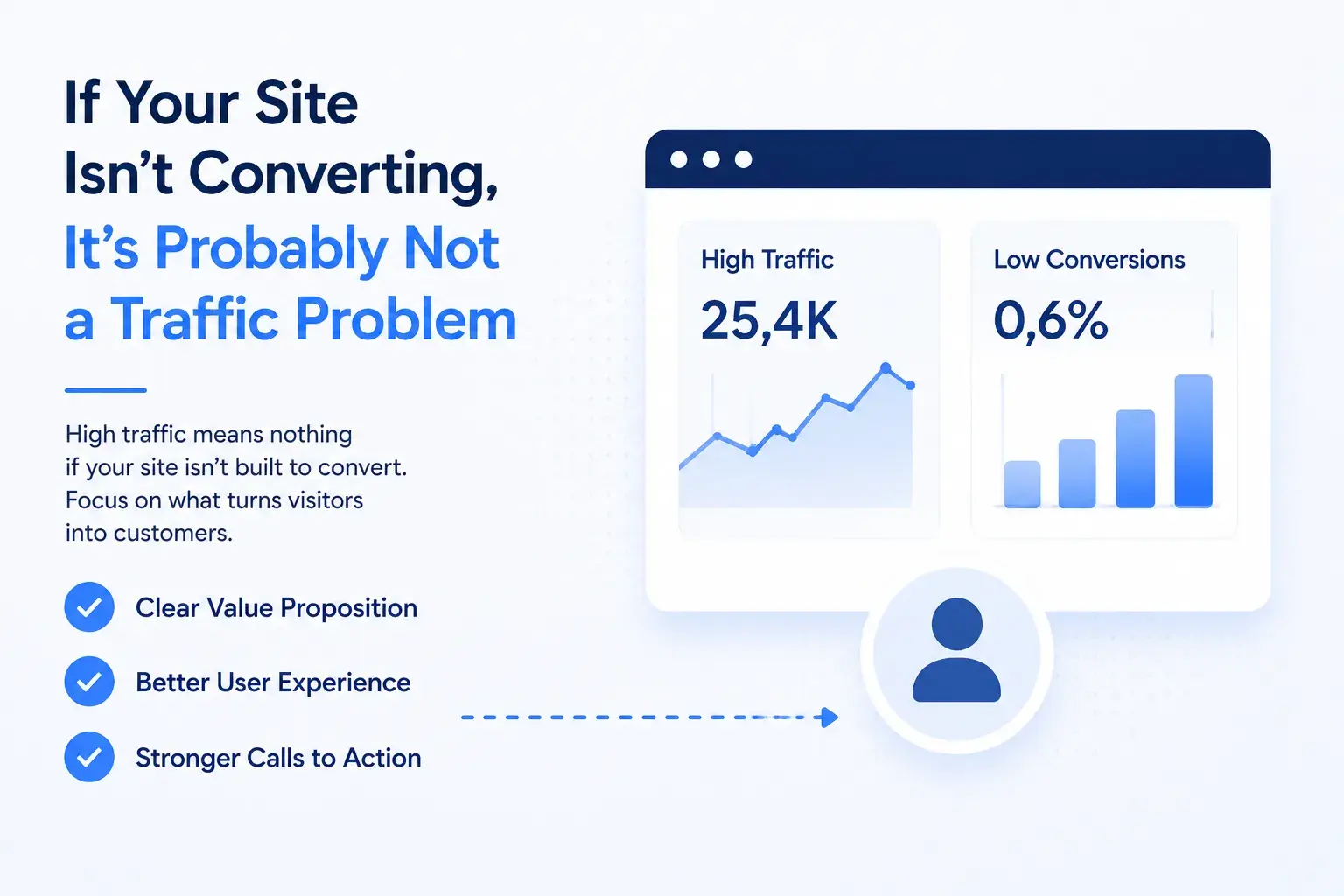
You’ve done everything right. The blog posts are live, and organic traffic is increasing month over month. And yet, there are zero clicks. Your demo calendar tells a different story.
Most teams will respond the same way: “Let’s drive more traffic”. But if your site isn’t converting, more traffic just means more people bouncing for the same reasons.
In most cases, it comes down to three things your homepage is quietly getting wrong:
In other words, you have a conversion problem. And conversion problems don’t respond to more traffic; they respond to better messaging, tighter positioning, and a demo CTA that actually works.
This article breaks down exactly where B2B SaaS sites lose qualified visitors before they ever become leads and what to fix first.
Before we get into tactics, pull up your homepage and show it to someone who fits your ideal customer profile. Give them five seconds. Then ask: “What does this product do, and who is it for?”
If they hesitate or give you a vague answer, you have your diagnosis. Not a traffic problem – you need a new SEO strategy that gives more clarity. Google’s algorithm now rewards content that directly answers the intent behind a search query.
This isn’t a hypothetical exercise. It’s the single audit you can run on your site that will clearly show why your site isn’t converting.
If your demos run 45-60 minutes because the first 20 are spent explaining what the product actually is, and different team members describe the product differently, you’re not dealing with a traffic problem. You’re dealing with a positioning problem. And that’s where on-page and off-page SEO for SaaS can help.
Features are proof points. Benefits are the message.
Most SaaS homepages are written by people who know the product too well. They lead with capabilities, what the platform does, instead of outcomes and what changes for the customer after they use it.
For example:
One tells prospects what you built. The other tells them what their life looks like after they buy.
Every headline, subhead, and hero section on your site should pass this test: Does this describe what we do, or what the customer gets? If it’s the former, rewrite it. On-page SEO content matters for targeting the right audience, boosting your rankings, and helping visitors become leads.
Here’s a sentence that appears, in some form, on thousands of B2B SaaS homepages:
“The all-in-one platform for teams of all sizes.”
It sounds inclusive. It’s actually the opposite. When you write for everyone, you will not get high-quality conversions, because no one reads that sentence and thinks, “this was built for me.”
But if you say: “For logistics companies managing 500+ daily deliveries.” Suddenly, the right person feels seen.
Most teams think they’ve defined their ICP, but they’ve only scratched the surface. Industry and company size are a starting point, not an ICP. When your targeting reflects buying readiness rather than surface demographics, demo rates improve almost immediately, because you stop attracting people who are only interested, and start attracting people who are ready to act.
If your team can’t express your differentiation there, it won’t show up in your ads or in a sales call. Think of your homepage as the first test of whether your positioning actually works. The homepage forces execution. Everything else follows.
There’s a specific issue with positioning that’s worth mentioning in this section, because it affects almost every SaaS company: multi-ICP confusion.
It goes like this. You started with one clear customer in mind. Then you expanded the product. Expanded into related industries and started selling to higher-value customers. Now your homepage is trying to speak to three different buyers simultaneously, and none of them feels like the page was built for them.
This isn’t just a homepage problem. It shows up in your demo pages, your pricing page, and your CTA. Each buyer is looking for something specific when they land on your page. A generic message serves them nothing.
The fix: primary ICP in the hero, everyone else below the fold.
You don’t need a different website for every buyer. You just need a clear hierarchy of the one you have. Structure your pages so your primary ICP sees themselves immediately in the hero section. The homepage does one job: make your most valuable customer feel like the page was written for them.
The best SaaS growth strategies in 2026 optimize not only for traditional search engines but for AI answer engines as well.
Let’s say your messaging is solid and your positioning is tight. Visitors land on your page, they understand what you do, and they feel like you’re talking to them. And then they hit your demo CTA, and something breaks down. This happens more often than most teams realize.
Here’s what usually goes wrong.
A form asking for name, work email, company, phone number, team size, use case, and how you heard about us is quietly killing your pipeline.
The optimal demo request form has four fields: name, work email, company, and one qualifying question. That’s it. If your sales team needs more information, they can get it on the call.
This is the single most impactful change most B2B SaaS companies can make to their demo funnel. Letting prospects book a meeting immediately after submitting a form doubles inbound conversion. The reason it works is psychological as much as logistical. When someone fills out a demo request, their interest is at its peak. Making them wait 24–48 hours for a follow-up email lets that momentum die.
Above-the-fold CTAs perform up to 2x better than buttons placed further down the page. If your primary CTA requires scrolling to find, you’re losing people who are ready to convert right now.
The language matters too. “Learn more” is passive. “Get a demo” is transactional. The more your CTA language reflects the visitor’s actual next step, the higher it converts.
76% of high-converting demo pages display customer logos above the fold. Placing testimonials or trust signals near your CTA increases conversion by 84–270%. Putting them in the footer, where almost no one scrolls, has almost no effect. The best social proof is role-specific. When you can, match your proof to your primary ICP.
Take a look at how this approach helped our clients. Here are two examples, two different industries, two different problems, but the same underlying fix.
They came to us with an outdated website that didn’t match the quality of their product. Navigation was confusing, the design was broken, and the homepage wasn’t guiding anyone anywhere.
We rebuilt it with a tailored SEO strategy to align with their goals.
The result: +20% uplift in signups for Dreamcore in just 3 months and a 15% drop in bounce rate. Same visitors, better website, more sales.
Take a look at the full Dreamcore case study to explore how we helped them increase conversion rates with a modern page redesign.
Another challenging client was Simber. When they came to us, they were ranking for 20–30 keywords but were struggling to stand out from competitors.
We did a full SEO audit, rebuilt their content strategy around local intent, and refined their service pages to better match what visitors were actually looking for with clearer CTAs.
The results: Six months later, clicks were up 1,030%, impressions up 2,864%, and their conversion rate increased to 40–50%. Now, they rank on the first page for 79 relevant keywords.
If you are curious about our approach to this project, read the full case study here: Simber Case Study.
Here’s the order of operations that tends to produce the fastest results:
1. Run the 5-second test: Show your homepage to five people who match your ICP. If they can’t describe what you do and who it’s for, you need to fix the hero section first.
2. Find relevant keywords: These keywords will help you target the right audience and cover their actually problem. Implement it in your next SEO content strategy.
3. Audit your hero headline: Put yourself in the customer’s shoes. Is it immediately clear what you do and who it’s for? Does it describe a real outcome, or just a feature? If you can’t clearly answer these questions, you need to rewrite it.
4. Check your demo page: Count the form fields. Is there inline scheduling? Is the navigation still visible? Remove everything that gives a visitor a reason to leave without booking.
5. Add social proof near your CTA: Find your most relevant customer testimonial and place it near the booking button.
6. Fix technical issues: Improving page speed and indexing issues can push your rankings higher. No one wants slow pages and broken pages.
7. Build one intent-matched landing page: Pick your highest-volume paid traffic source and build a dedicated page for it. Competitor traffic, brand traffic, and category traffic all have different needs. Test the dedicated page against your generic one and measure the difference.
None of these changes requires a full rebrand or redesign. Most of them can be tested within days. So, don’t waste your time and start implementing them to increase your conversions.
More traffic is a fine goal. But if your site isn’t converting, more traffic means just more waste. The gap between most of the high-performing SaaS websites is the clarity they provide. Clear messaging that tells the right person what you do, a tight positioning that makes them feel like the product was built for them, and a good path to booking a demo the moment they’re ready.
If not sure where to start, book a demo with us today, and we will help you to outrank your competitors. Our expert team focuses on creating a tailored SEO strategy that meets your unique needs, leading to higher rankings, increased traffic, and more conversions into leads.
Book a free consultation today to learn how we can help you attract more of the right traffic and turn it into qualified leads for steady growth.





Results

Results

Results

Results















Is AI search driving traffic to your saas
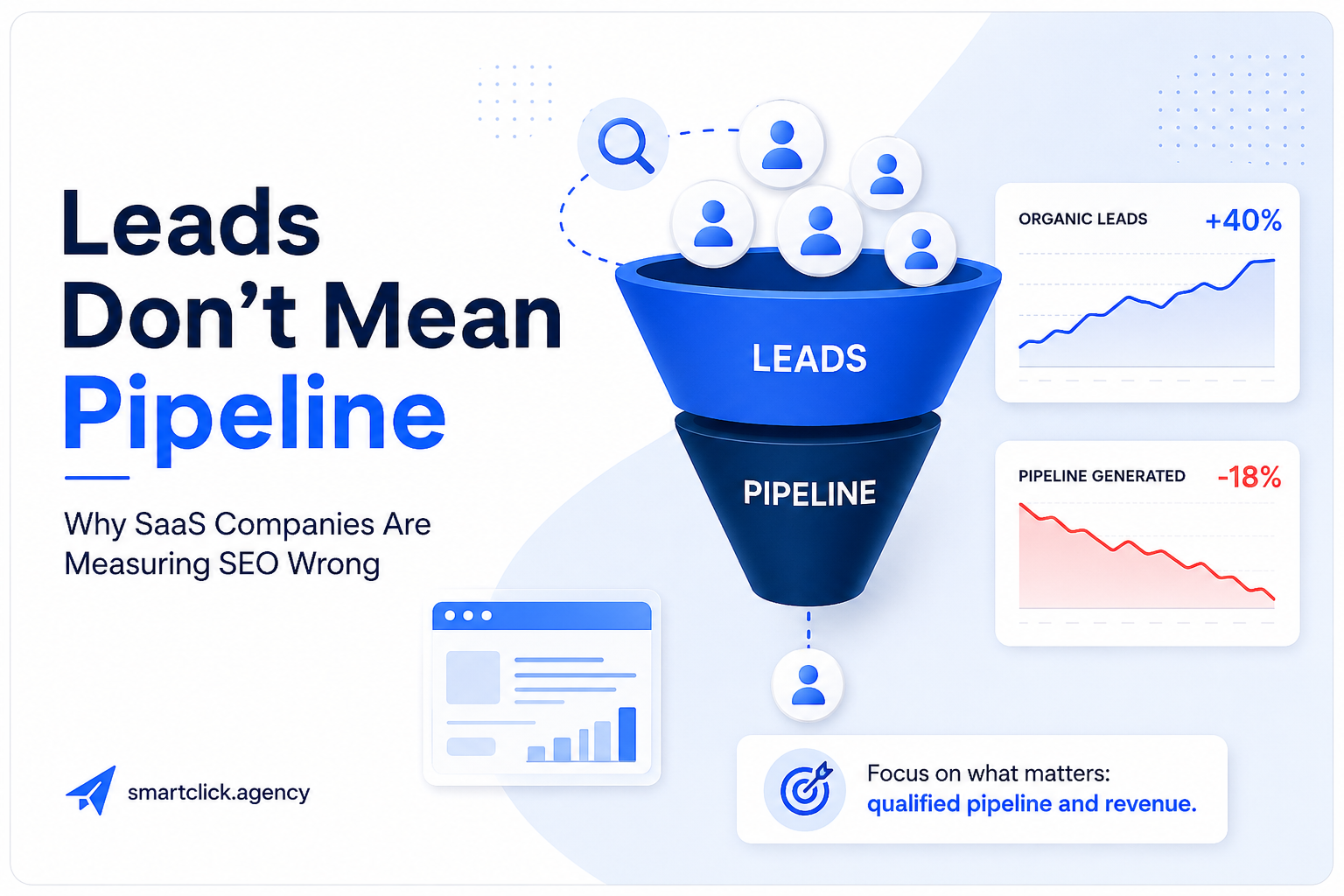
More leads don’t translate into more pipeline
From Ranking to Recommendation
Don’t let your competitors take the lead!