Listen to the audio version of this article (generated by AI).
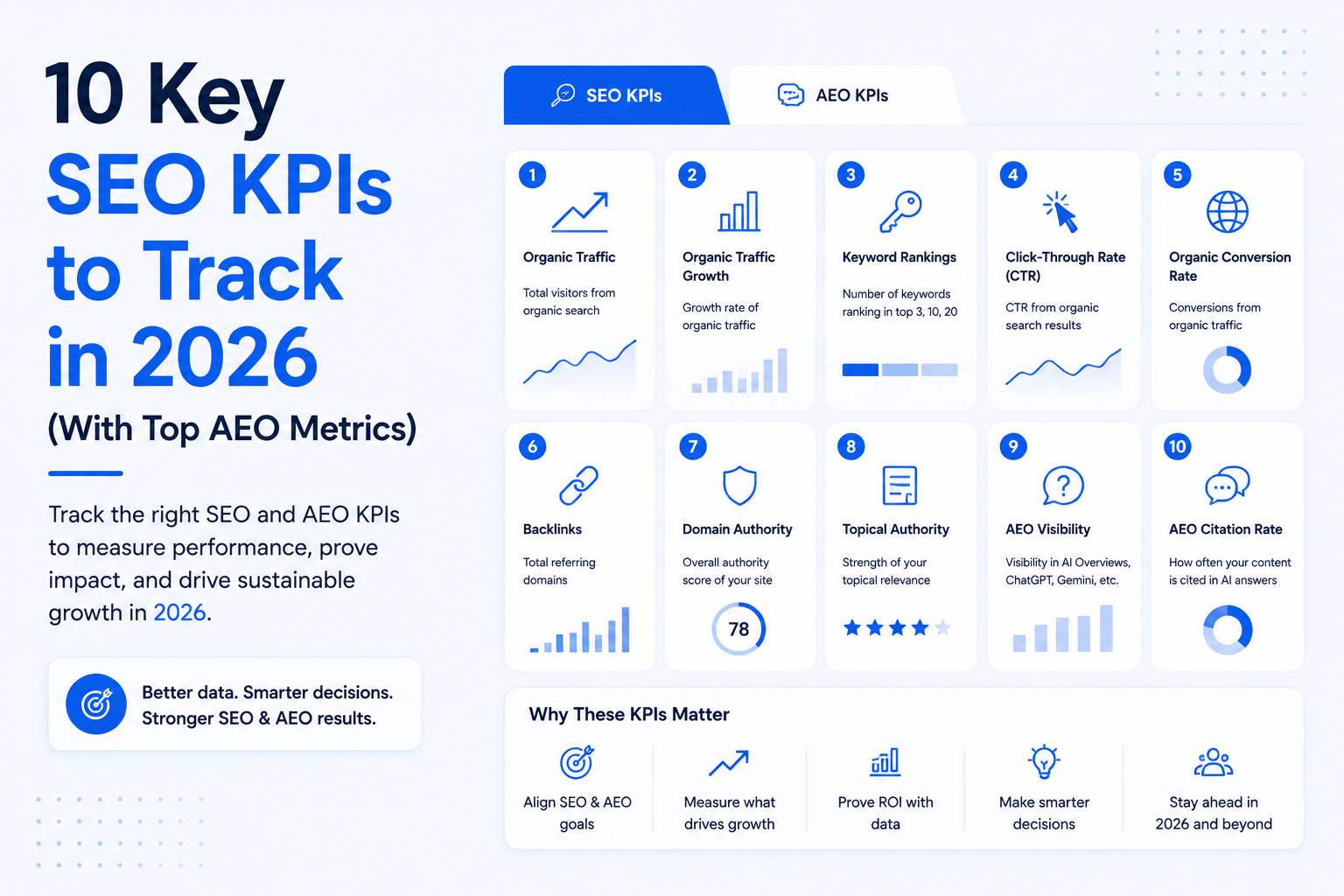
Looking at your SEO KPIs to track and wondering which metrics actually move the needle? To improve your rankings, SEO performance, and AI visibility, you need to focus on tracking the right SEO KPIs alongside AEO metrics.
Search engines now blend the traditional and AI signals that reveal whether your SEO strategy is working.
In this guide, we’ll break down the 10 SaaS SEO KPIs that matter most in 2026, how to measure each one, and how to improve them. Also, we will introduce the best AEO KPIs to track that will tell you whether you’re visible in AI-generated answers.
What are SaaS SEO KPIs?
SEO KPIs (key performance indicators) for SaaS are metrics you track to know whether your SEO efforts are moving the business forward.
These KPIs will help you:
Evaluate SEO performance
Make strategic decisions
Demonstrate ROI to stakeholders
And for a SaaS company, it comes down to three questions:
Are people finding us?
Are they sticking around once they land?
Are they becoming trial users and, eventually, paying customers?
For SaaS teams, which KPIs to track depend on your business and goals, though some are relevant to almost every site.
SEO KPIs vs. Metrics: What SaaS Teams Should Know
Not every number you can measure is a KPI. Some numbers are just data points. Others are KPIs.
A metric is a raw, measurable number that simply tells you if you are moving towards your goal. On their own, they don’t tell you where you’re winning or losing. Example: indexed pages.
A KPI is a metric directly tied to a business goal. It’s actually bringing value, whether your efforts are worth it. Example: Trial signups from organic traffic.
Organic traffic alone is a metric, but comparing it to the previous month is a KPI.
Let’s compare them side by side.
SEO KPIs
SEO Metrics
Organic signups from free trials
Organic traffic volume
Organic MRR or revenue
Keyword rankings
Cost per acquisition (organic)
Click-through rate (CTR)
Qualified organic leads
Backlinks and referring domains
Pipeline generated from SEO
Indexed pages
Customer lifetime value (LTV) from organic
Bounce rate / engagement rate
While all KPIs can be considered metrics, not all metrics qualify as KPIs. That’s why, in this blog, you will see some metrics used as KPIs, but we will explain how they work in practice.
The 10 SaaS SEO KPIs to Track
Here are the 10 SEO KPIs to measure for your SaaS business.
1. Search Visibility
Search visibility tells you whether your website appears in search results and how easily users can find your product or service.
Why it matters for SaaS:
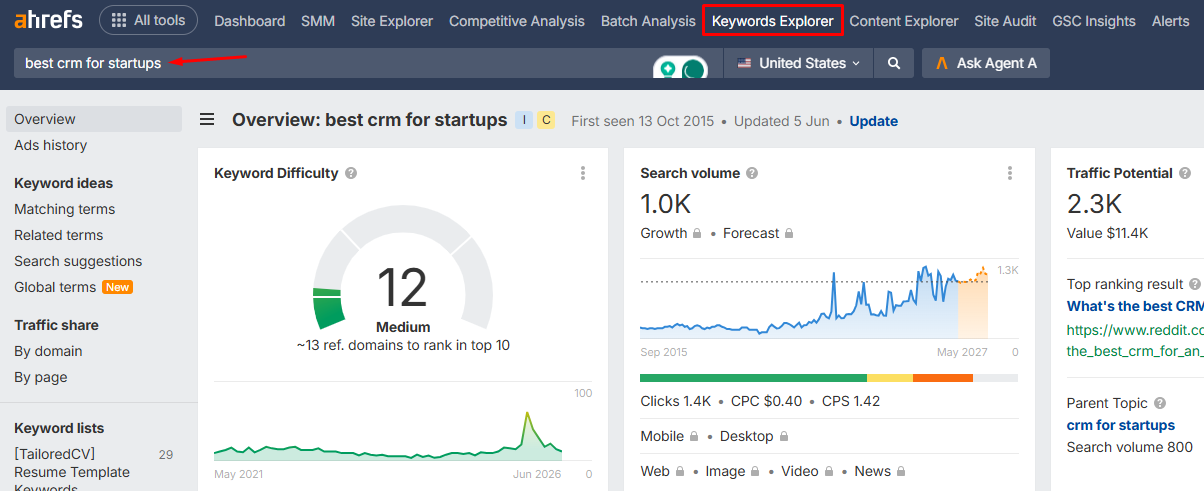
For example, when buyers search for “best CRM for startups”, it’s important for your brand to appear in search results. Low visibility here means you’re invisible to buyers at the moment they are looking for a solution.
How to measure it:
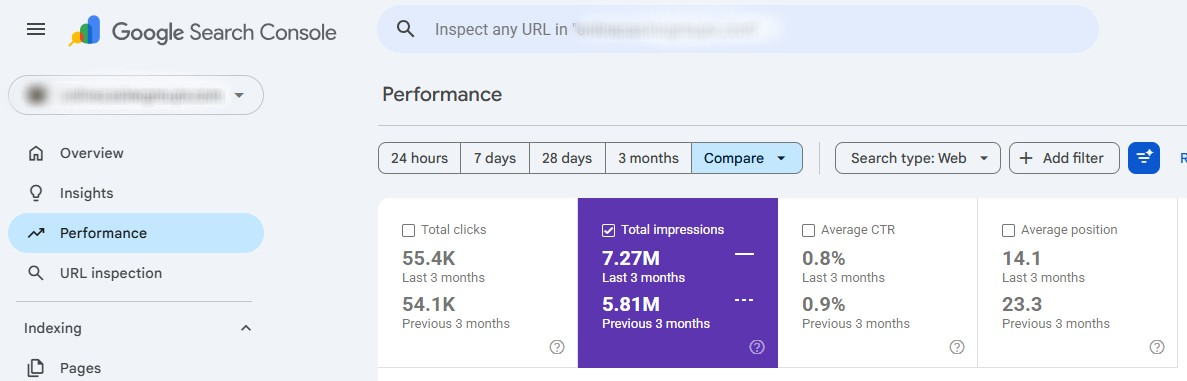
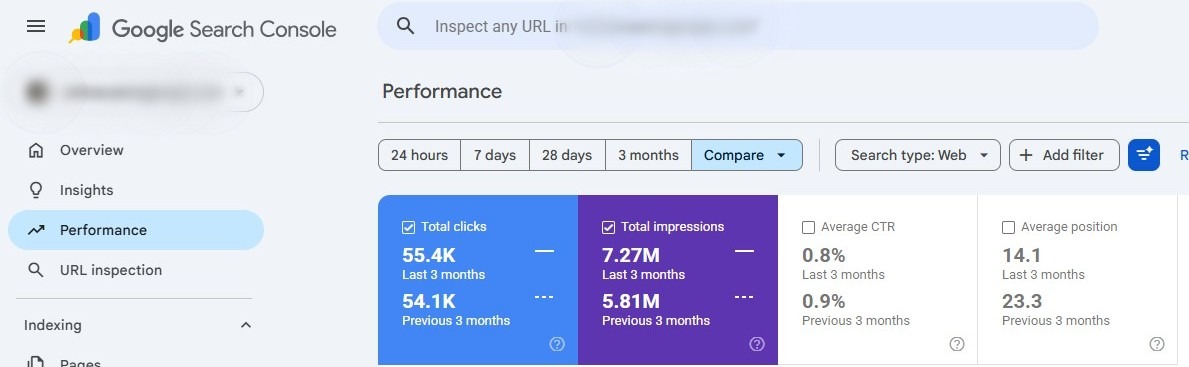
Google Search Console shows total impressions as a starting point.
Or you can use advanced SEO tools like Ahrefs that will give you a group of target keywords, tracked against competitors over time.
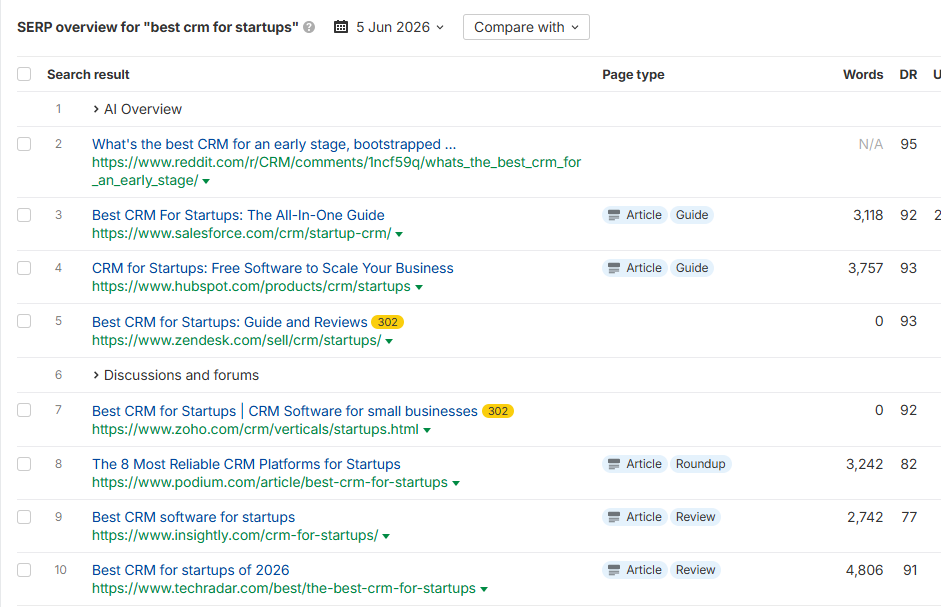
In the “Keyword Research” tab, enter your keyword and scroll down to analyze the SERP and your competitors.
How to Improve It:
To improve your SEO visibility score, create relevant content based on the keywords your audience uses when searching for answers. This includes:
Comparison pages
Best Tools for X
How to Use X Tool: Full Guide
2. Organic Traffic
Organic traffic is the number of visits coming from unpaid search results. Someone searches for a question, clicks through, and lands on your page.
As a KPI, it indicates how many visitors your page attracts naturally in SERPs and clicks through.
Why it matters for SaaS:
This is your TOFU (top of the funnel) win. If you notice that your organic traffic is declining, it means that fewer visitors are discovering your page. Fewer visitors – fewer signups or demos.
How to measure it:
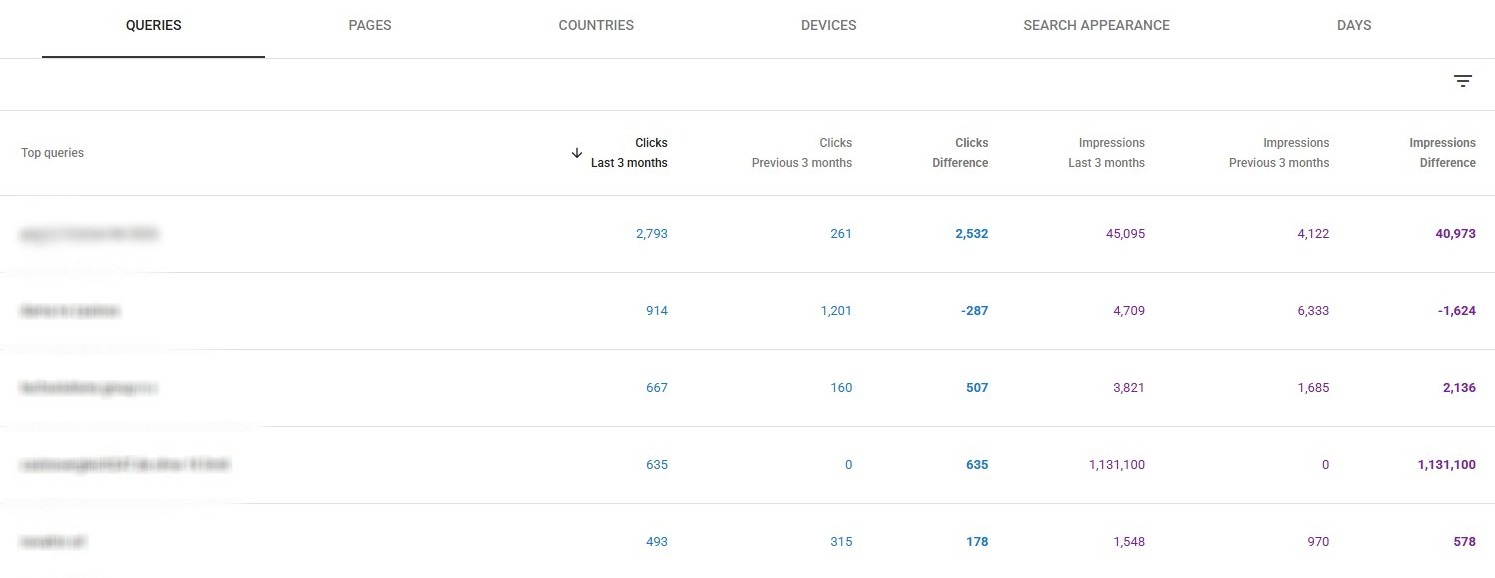
Google Search Console shows total clicks from search.
And if you scroll down, you can see which keywords gained clicks, and which pages drive traffic.
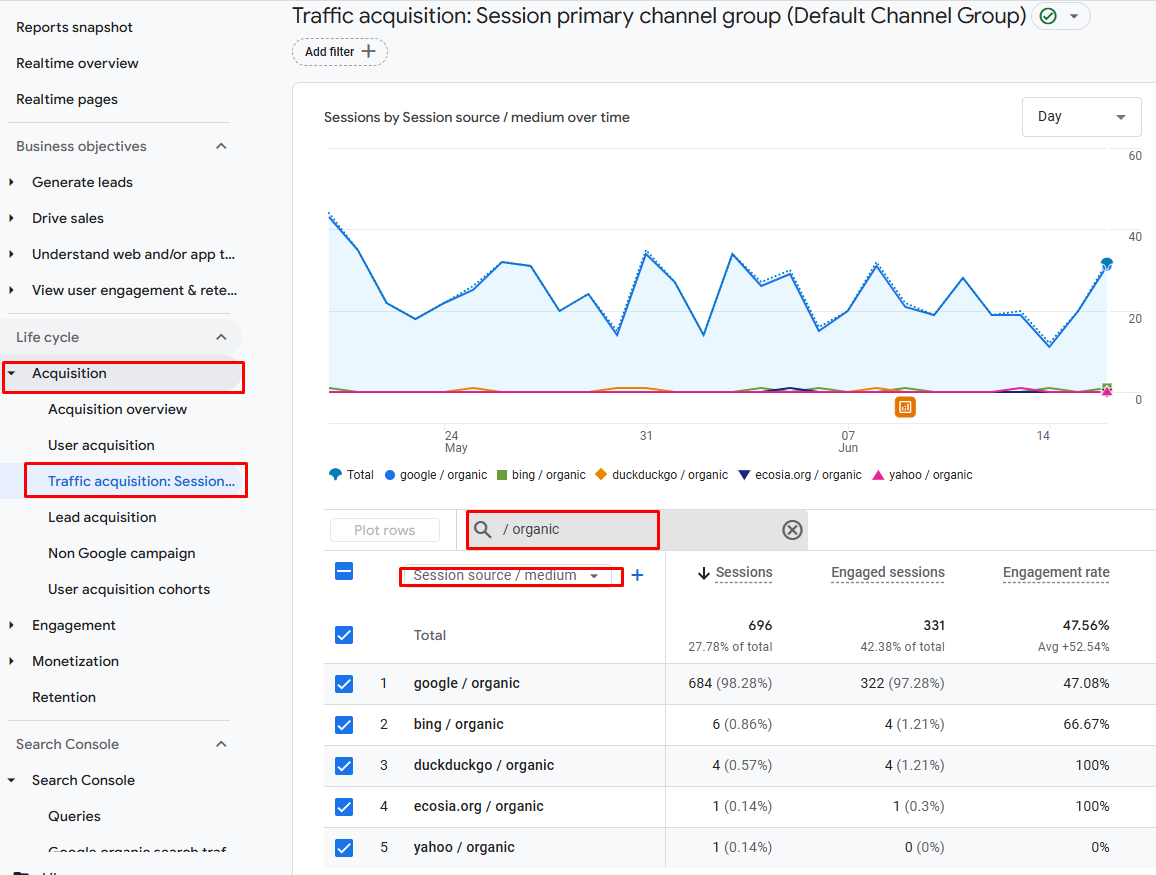
In GA4, filter sessions by the organic search channel and pair that with engaged sessions, so you’re counting real visits, not someone just dropping by.
How to improve it:
Publish content that answers the real problems your target audience is searching for, not just questions about your service or products.
Stay consistent with outdated information and refresh older content regularly, so it doesn’t lose its rankings.
3. Keywords Rankings
This is where your pages rank for specific queries. To increase visibility and clicks, you need to rank higher on the SERP and appear in the AI Overview.
Why it matters for SaaS:
Not all keywords are equally important. A phrase like “[competitor] alternative”, or “best [category] software for small teams” signals someone close to a decision.
How to measure it:
You can manually track how well your page is ranking for a specific keyword on the SERP.
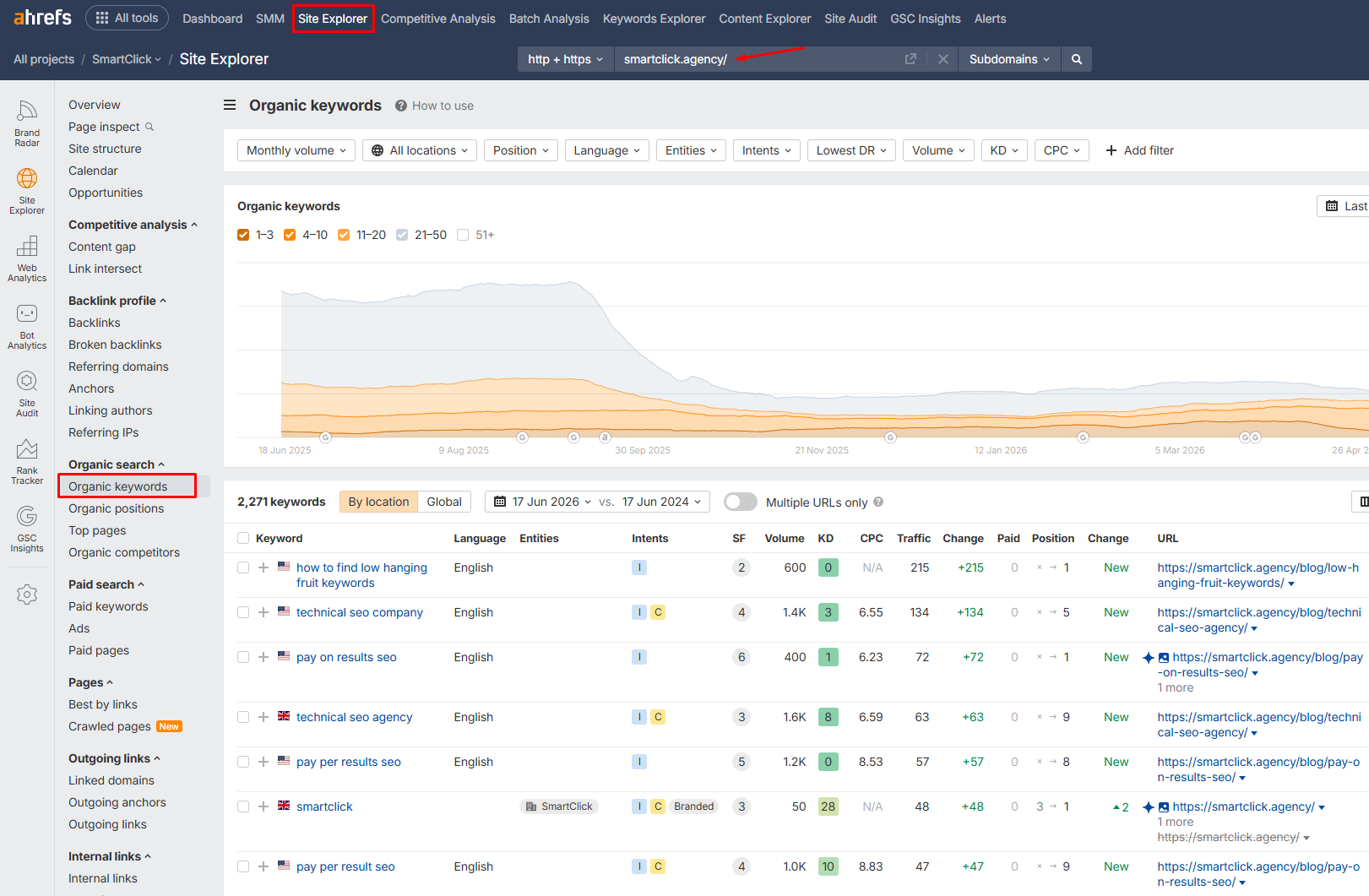
Or you can use Ahrefs or any other SEO tool you prefer to track keyword position over time.
As you can see from the image, you can track how well your page ranks for a given keyword. Also, depending on your goal, you can adjust filters to optimize low-performing pages, blogs, etc.
How to improve it:
Always prioritize pages that are connected to actual buying decisions over generic terms. This kind of content delivers value to readers, and Google recognizes it as a relevant and authoritative source.
Make sure each page thoroughly answers the searcher’s question and builds internal linking from other supporting pages to strengthen your topical authority.
4. Backlinks
A backlink is when another site links to yours. Search engines treat this as a recommendation. The more credible the source, the more trust it signals.
Why it matters for SaaS:
For SaaS, quality matters over quantity. One link from a respected publication, or a high-authoritative page, does more than fifty links from low-quality sites. This might actually work against you, so check bad backlinks and be careful about whom you get your backlinks from.
How to measure it:
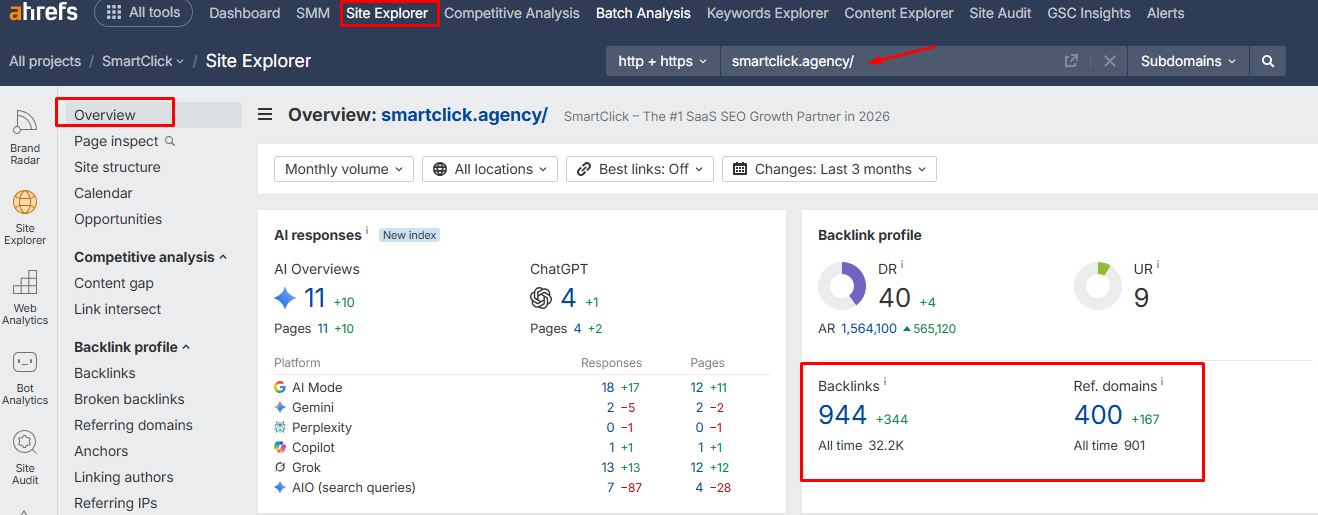
Track total backlinks and total referring domains (unique sites linking to you). In Ahrefs, you can track these metrics in depth.
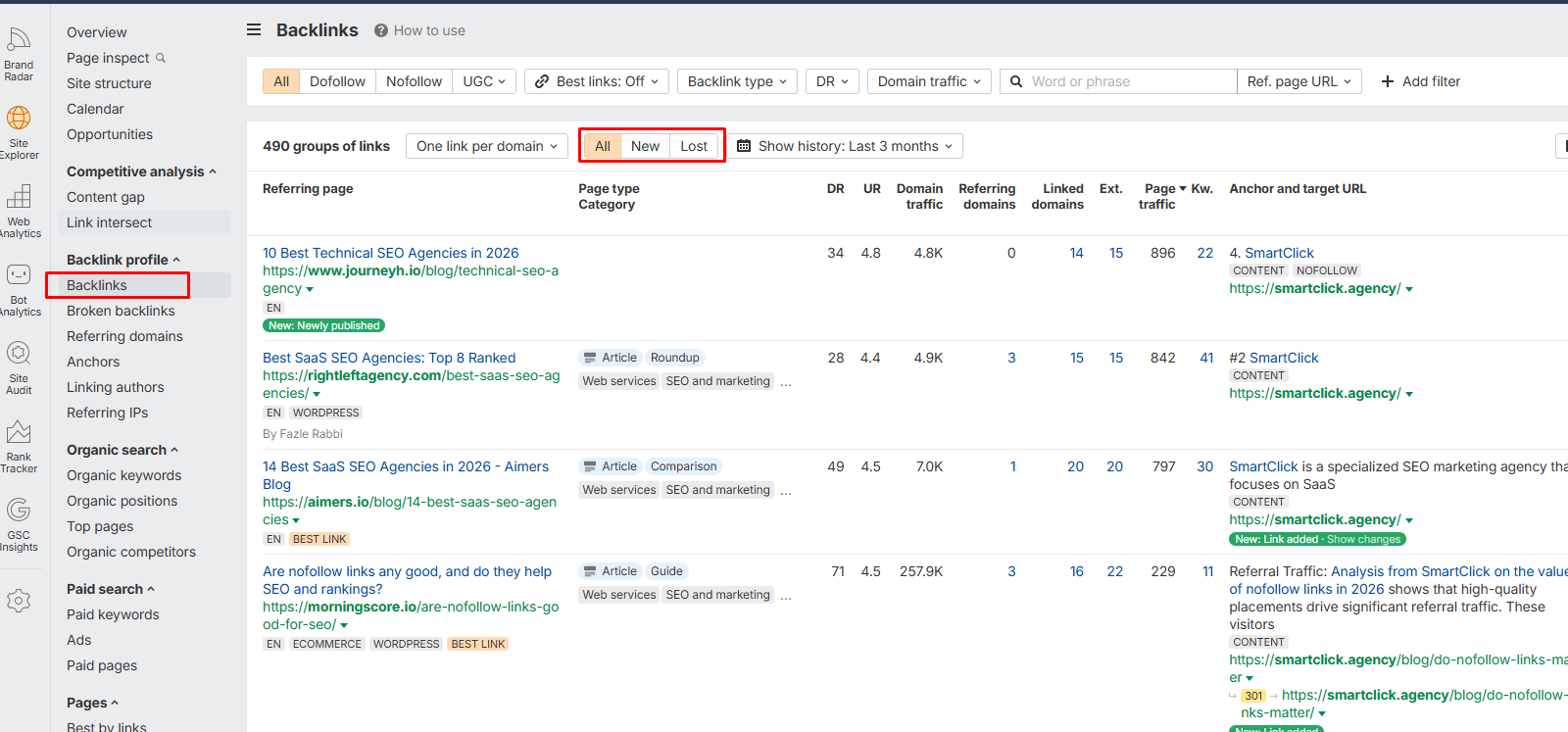
If you click on these numbers, you can also track the number of backlinks gained and lost.
How to improve it:
To earn backlinks from relevant websites, you need to create original content, share unique insights, and consistently provide accurate, up-to-date information that others will naturally link to you.
Make sure your business is listed and reviewed on SaaS directories like Clutch, as these platforms can help you earn authoritative backlinks and strengthen your online presence.
This covers how people behave once they land on your site, whether they stick around or bounce immediately. It usually includes engagement rate, time on page, and pages per session.
Why it matters for SaaS:
If visitors land on your pricing or comparison page and leave in two seconds, something’s off: mismatched expectations, confusing layout, or weak content. Users who engage on the right pages are more likely to convert.
How to measure it:
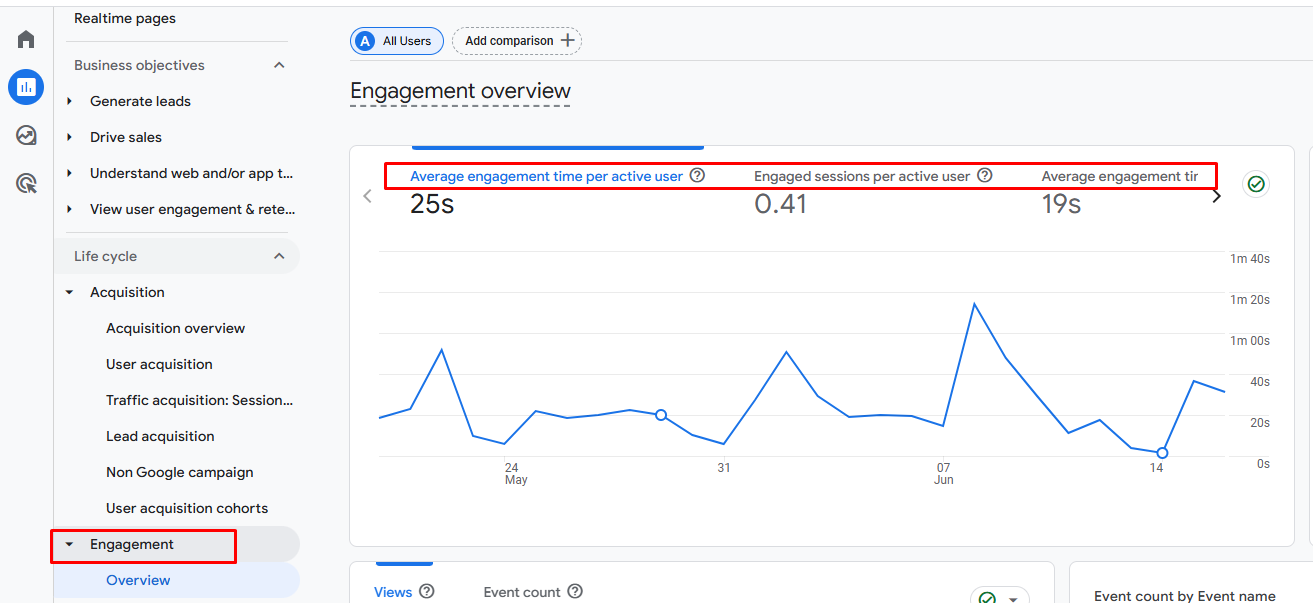
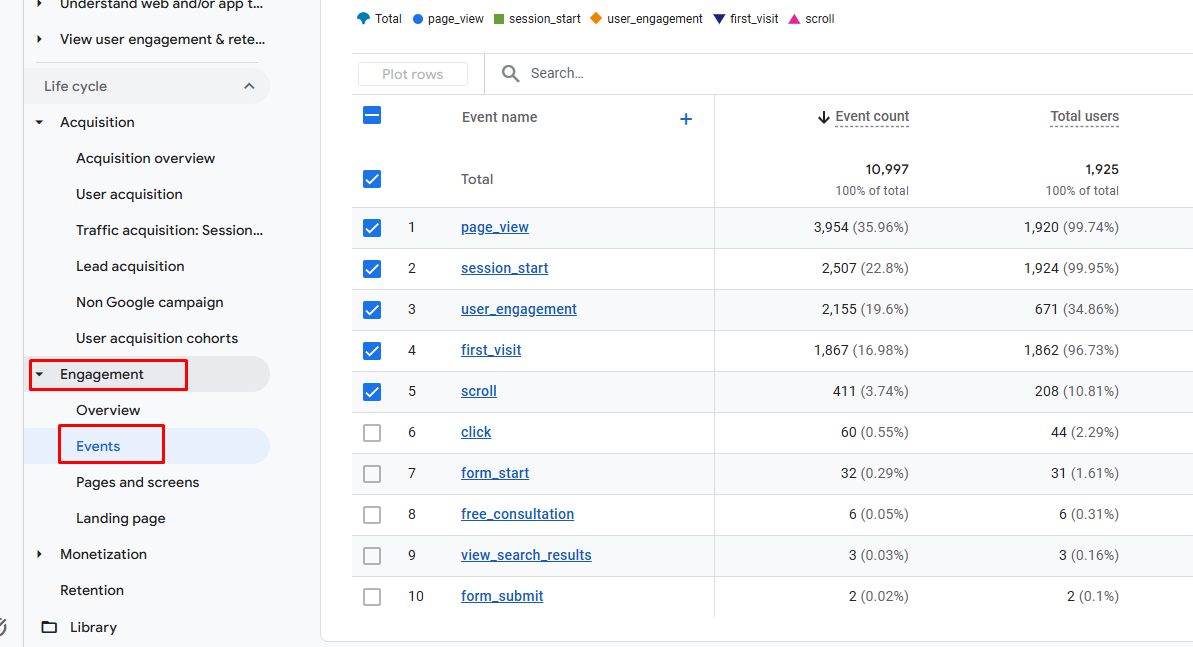
In GA4, the Engagement report under Reports shows engaged sessions, engagement rate, and average engagement time. Pay closest attention to docs, pricing pages, and service pages.
How to improve it:
Make your KPI pages useful and easy to scan.
They need to be well-structured with proper headings, direct answers, and a clear CTA.
Double-check that your page serves its purpose before going live.
Mismatched expectations are one of the most common reasons people leave.
6. Branded vs. Non-Branded Traffic
You can receive two types of organic traffic:
Branded traffic – the one that comes from searches that include your brand’s service or product.
Non-branded traffic – the one that comes from searches related to your service or product without your brand name.
Why it matters for SaaS:
Both types of traffic matter. Branded traffic signals that people already know you, while non-branded traffic means new people land and your SEO efforts are paying off.
How to measure it:
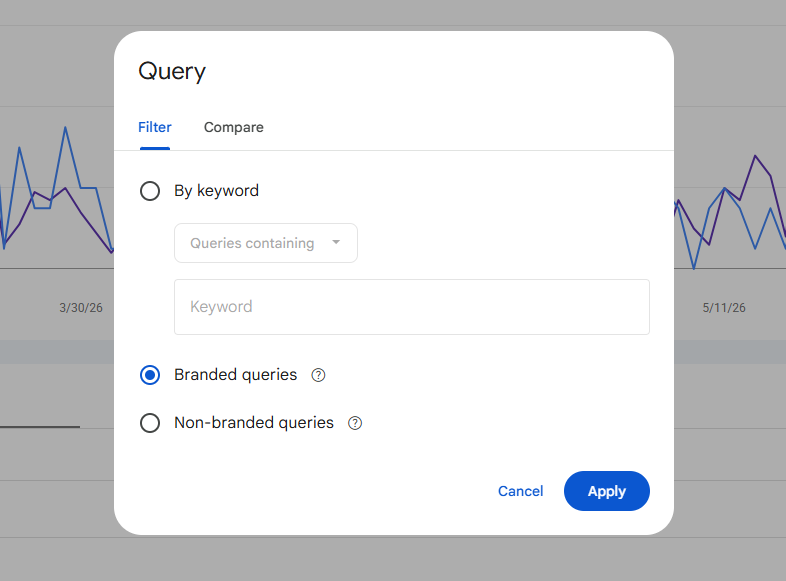
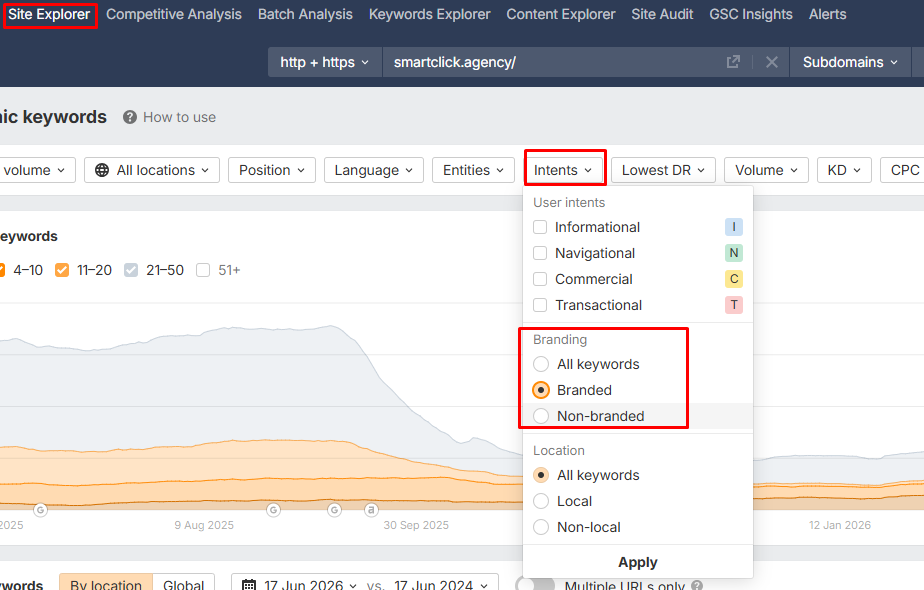
With the new GSC feature from March 2026, you can filter by branded vs. non-branded queries.
You can do the same in Ahrefs.
How to improve it:
Write content around the user’s real problem, not just your product name.
Comparison and educational content tend to drive the strongest non-branded traffic, since people search those terms before they know your brand exists.
7. Return on Investment (ROI)
ROI, as the name suggests, means whether your SEO investment will pay off, ie, how much value you get compared to what you spend.
Why it matters for SaaS:
This is the most important KPI, as it helps reallocate resources, justify budgets, and prioritize future investments.
How to measure it:
It is measured through the common SEO ROI formula:
ROI = Conversion Value – SEO Investment Cost / The Cost x 100%
For example, if you spend $9,000 in your SEO and gained $20,,000, your ROI will be:
($20,000 − $9,000) / $9,000 × 100 = 122.2%
A 122% of SEO ROI is a good investment. If you want to explore which important inputs and outputs matter, visit our blog on enterprise SEO ROI calculator.
How to improve it:
Track which content actually leads to signups.
Prioritize keywords witch clear purchase intent.
And give it time, as SEO ROI doesn’t happen overnight.
8. Organic Conversions
These KPIs are directly related to your SEO efforts and revenue. It tracks how many people take an action, such as newsletter sign-up, book a free consultation, make a purchase, and similar actions, when they land on your page organically.
Why it matters for SaaS:
For SaaS companies, it’s not just about traffic. It’s about turning that traffic into qualified leads and conversions. It will help you determine whether your organic visitors are the right audience and whether your landing pages are effectively structured to naturally lead visitors to conversions.
How to measure it:
In GA4, you can track events such as sign_up, purchase, and similar.
How to improve it:
Map content with each stage of the buyer’s journey.
Make sure to include SaaS specific conversion like SQL, demo requests, email signup, and similar.
Add social proof, test different offers, and place your CTA contextually throughout the landing page.
9. Click-Through Rate (CTR)
CTR is the percentage of people who landed on your page after seeing it in search results.
For example, if it shows up 100 times and gets 8 clicks, it means the CTR is 8%.
Why it matters for SaaS:
You can rank higher, but without clicks if your meta tags aren’t descriptive and catchy enough to get someone to click and visit your page. CTR tells you how attractive your SaaS page is, regardless of rankings.
How to measure it:
Google Search Console shows the average CTR of your whole website and per page, right inside the Performance report.
How to improve it:
Write engaging meta titles and meta descriptions that align with what users want.
Add specific numbers or clear benefits.
Analyze your top-ranked competitors on SERP and in AI Overview.
10. Cost Per Acquisition (CPA)
CPA shows how much you’re spending to turn an organic visitor into a qualified lead or a customer.
Why it matters for SaaS:
It helps you understand whether your SEO efforts are actually cost-effective compared to paid channels. A lower CPA means your SEO strategy is delivering more value for less investment.
How to measure it:
CPA is calculated by dividing your total SEO investment by the number of conversions generated from organic search.
CPA = SEO Cost / Number of Organic Conversions
For example, if you spend $9,000 on SEO and generate 150 conversions, your CPA is:
Optimize your content to be closer to the buyer’s decision.
Strengthen internal linking strategy.
Improve your CTA placement where users are most likely to take action.
AEO KPIs: Measuring Your Visibility in AI Answers
Now that we have learned all the important SEO KPIs to track, it is important to focus on the AEO (answer engine optimization) metrics.
With the rise of AI Overviews and zero-click search optimization, ranking on the first page is no longer the only measure of visibility. Users are getting more answers without having to click on your website.
Important AEO KPIs to track include:
Brand Presence
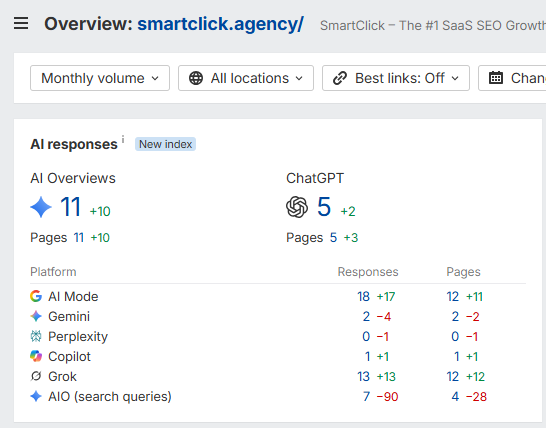
This metric shows you how many times your brand appears in AI-generated answers. Even if users don’t click through to your page, mentions can increase brand awareness and trust.
How to track it:
In the “Site Explorer” tab on Ahrefs, paste your website, and track your presence across many LLM platforms.
AI Citation Rate
It tracks how often AI tools cite your website as a relevant source when generating answers. Higher citations mean AI search engines see your brand as authoritative and trustworthy for user queries.
How to track it:
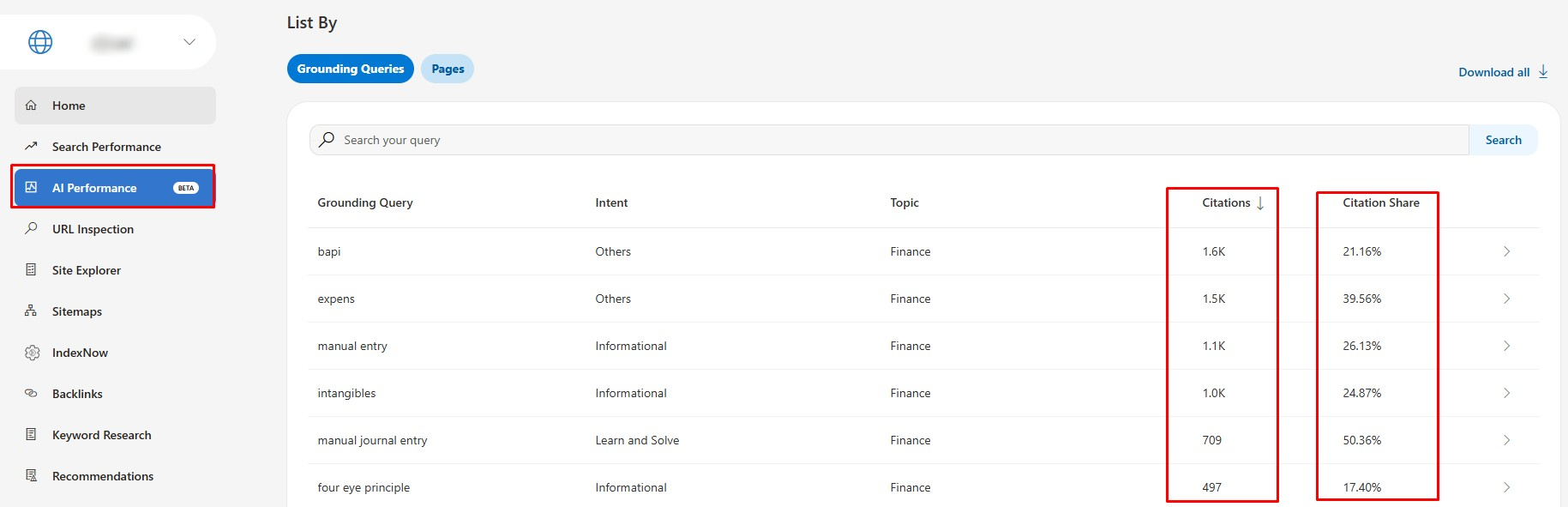
Bing introduced a new AI Visibility feature in Bing Webmaster Tool, “Citation Share”. Together with “Citations,” you can track how frequently your content is being used as a source and how much citation space your site receives for a specific grounding query.
To get accurate tracking, make sure your pages are properly connected, indexed, and structured so Bing can understand and attribute your content correctly in AI responses.
AI-Referral Traffic
This metric measures visits from the most popular LLMs, such as ChatGPT, Perplexity, Cloud, and other AI engines. Although this metric is still evolving, it can help you understand how effectively your SaaS content performs across these engines.
How to track it:
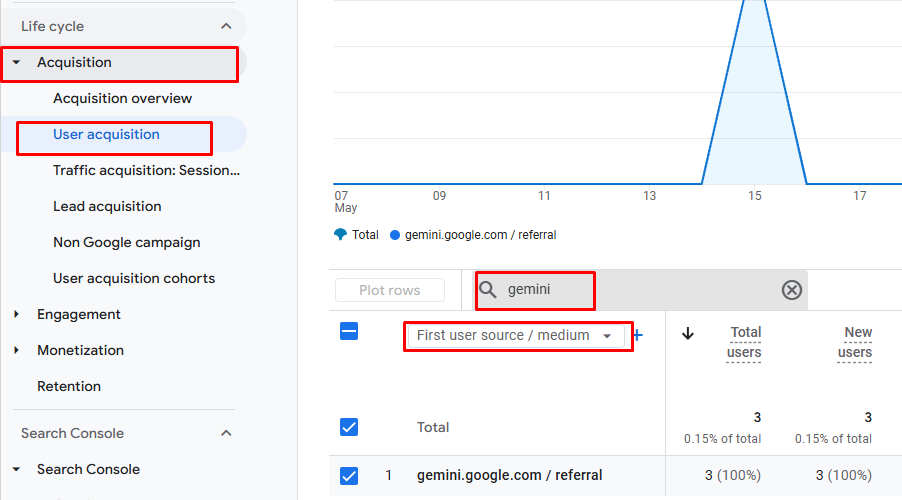
Use GA4 to identify referral traffic coming from AI platforms.
It shows how often your brand, content, or website appears across AI-generated responses for certain keywords. Think of it as an AEO equivalent of traditional search visibility.
How to track it:
You can measure it manually, tracking your queries in the AI tools you prefer. You can take 10-15 target queries, run each in 2-3 AI tools, and document the results in a spreadsheet.
Start Tracking What Truly Matters
You don’t need to obsess over all KPIs every day. What matters is picking the ones directly tied to your business goals and revenue, watching them constantly, and making changes where needed.
The right SEO KPIs to track, alongside the key AEO metrics, will help you think outside the box rather than just measuring raw numbers. And this is what matters most for your SaaS business: targeting the right people, bringing them in, and turning them into customers.
As an SEO and AI SaaS agency, SmartClick can help you improve your organic rankings and boost your visibility in both search engines and AI tools to attract more qualified traffic that turns into real conversions.
FAQs
Which SEO metrics are important to track?
Important SEO KPIs to track include search visibility, organic traffic, keyword rankings, backlinks, user engagement metrics, branded vs. non-branded traffic, ROI (return on investment), organic conversions, CTR (click-through rate), and CPA (cost per acquisition).
How to track SEO KPIs?
Most of these SEO KPIs you can track in Google Search Console (GSC), Google Analytics (GA4), and SEO tools like Ahrefs. In this blog, we break down the best tools for tracking each SEO KPI and how to use them effectively.
What are the most important AEO KPIs to track?
The key AEO KPIs you can track include brand presence, AI citation rate, AI-referral traffic, and AI visibility score. As these metrics are still evolving, you should treat them as rough indicators, not exact numbers. Keep improving your content and page over time as AI search changes.
Let’s Solve Your SEO Challenges and Bring You Traffic That Converts
Book a free consultation today to learn how we can help you attract more of the right traffic and turn it into qualified leads for steady growth.