Listen to the audio version of this article (generated by AI).
Traditional SEO search is no longer enough to be AI visible. You don’t need to optimize for just one keyword. With the introduction of AI search engines, the ranking has now shifted to how to get cited in AI-generated responses.
LLMs now fan out user queries into more specific sub-queries to match the user intent and deliver the most suitable response. And if your content doesn’t appear in those hidden layers of intent, you can be ignored by the LLMs.
The query fan-out technique is critical to determining whether your content gets cited in AI answers.
And if you struggle to understand the concept or don’t know how to optimize your content, we will explain everything you need to know and improve your AI visibility.
What Is Query Fan Out?
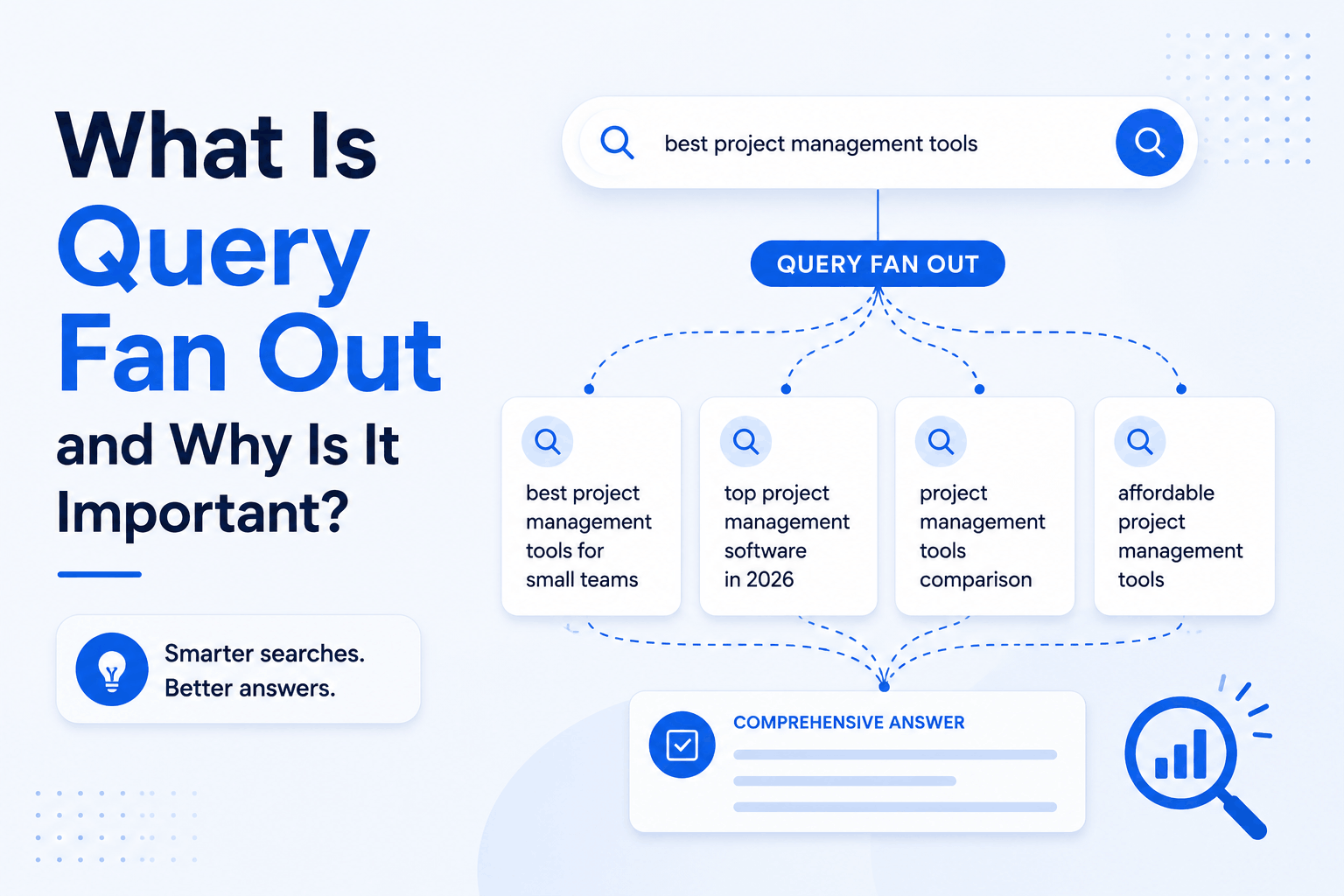
Query dan out is a technique used by AI models to break complex prompts into multiple simple, specific sub-queries to generate a final response.
Instead of treating the user’s search term as an isolated query, the LLMs “fan out” that query into related questions, collect information, and generate a response to best match the core query.
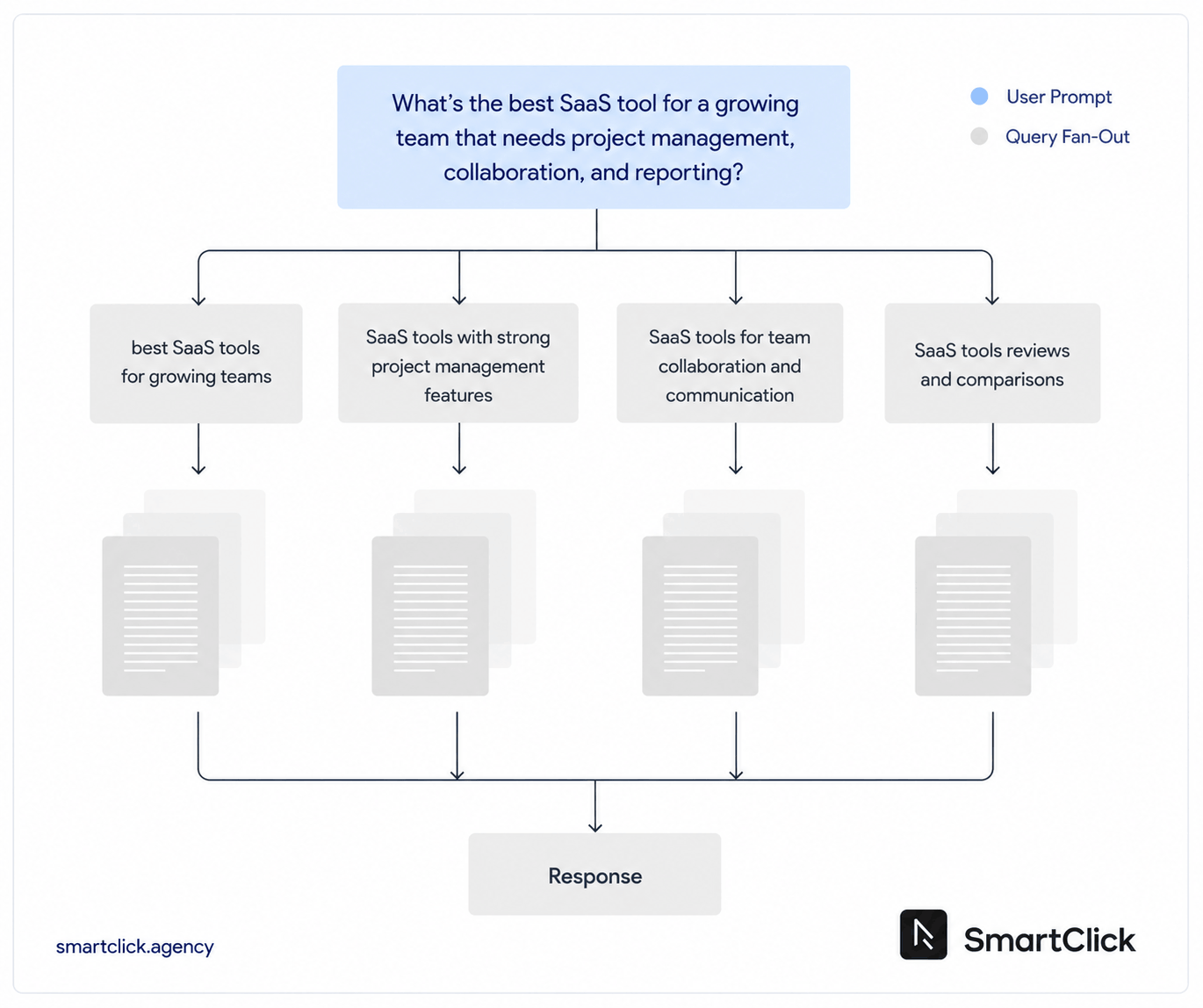
Here’s how query fan-out expands a single search into multiple related queries:
For SaaS brands, this means that your content can be mentioned in those AI-generated responses, not because you ranked higher for the main keyword, but for creating content that best answers one or more of these sub-queries.
How Does Query Fan Out Work in LLM Search
Let’s start with the basics. Before learning how to optimize your content for the query-fan out technique, it’s important to know how it works in LLMs.
Query Expansion: When a user types a query, AI acts as a researcher, analyzing the main query in depth and exploring broader semantic questions to provide the best answer to the user. This is the fan-out phase.
Multi-Query Retrieval: AI conducts research on the user’s behalf. And this is the key difference comparing with traditional search.
Result Analysis: AI analyzes the top answers for each sub-query. It pulls out related statistics, facts, steps, and images that directly answer the specific sub-query. At this stage, schema and content structure are especially important. Your content needs to be well-structured, so AI models can understand and extract information from it.
Response Generation: As the last step, AI bots gather the best information (with cited facts) and put it into a natural conversation. The result is a synthesized answer where only the most relevant sources get cited in AI Overviews, ChatGPT, Perplexity, Claude, and other AI platforms, where you want your SaaS brand to appear.
Why AI Search Uses Query Fan Out
LLMs use query fan-out to improve the quality of their answers and reduce hallucinations by breaking a question into several smaller searches instead of relying on just one.
This helps the model analyze the topic from different angles, pull in more relevant information, and cross-check what it finds before responding. The result is a more accurate, balanced answer that feels more complete and genuinely helpful.
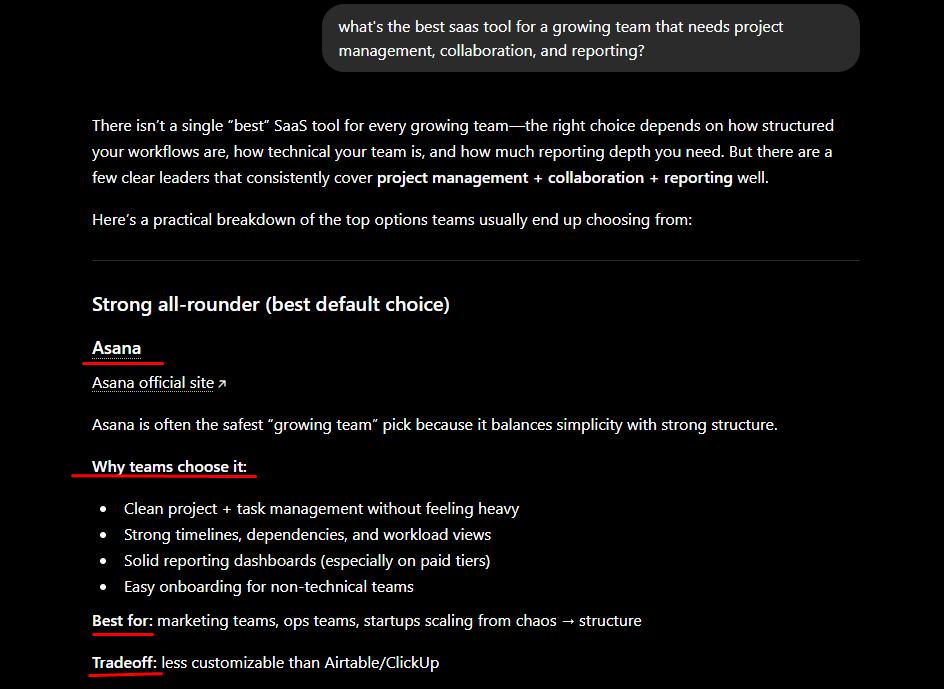
In the example below, you see that ChatGPT assesses the main query from different angles to better satisfy search intent (what the user wants).
Query Fan Out vs. Traditional Search
Let’s compare traditional search vs. query fan-out side by side to understand the difference.
Dimension
Traditional Search
Query Fan-Out Search
Intent handling
Single interpretation of the query
Breaks query into multiple sub-intents
Coverage
Narrower, may miss important facts
Broader, explores multiple angles of the same question
Result structure
List of ranked websites
Multiple clusters synthesized into one answer
Depth of insight
Often surface-level or one-dimensional
More comprehensive, multi-perspective output
Search behavior
Reactive – matches the keywords exactly as given
Predictive – matches user intent and expands even not explicitly asked
Query Fan-Out in Google AI Mode
With the introduction of Google’s AI Mode in 2025, the query fan-out technique has proven to be highly effective in delivering more digestible and helpful advice for decision-making.
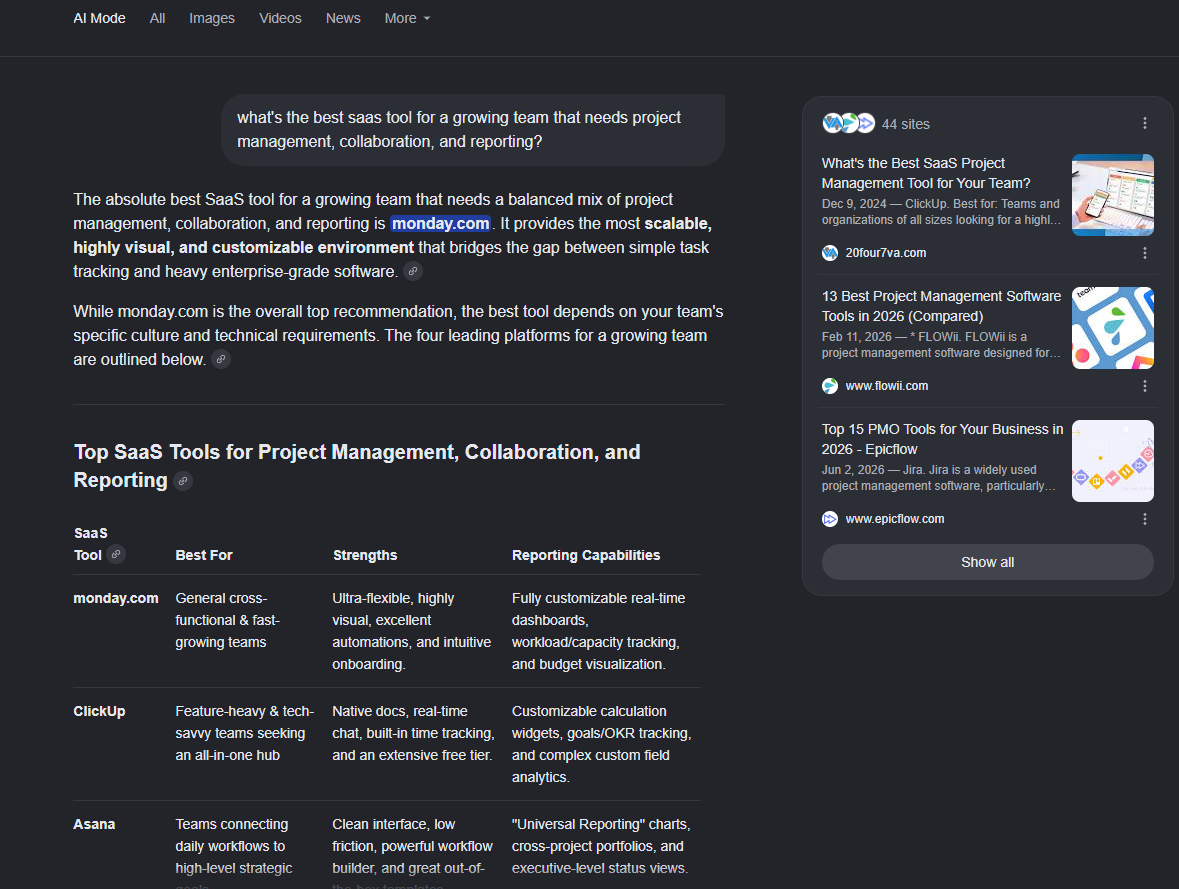
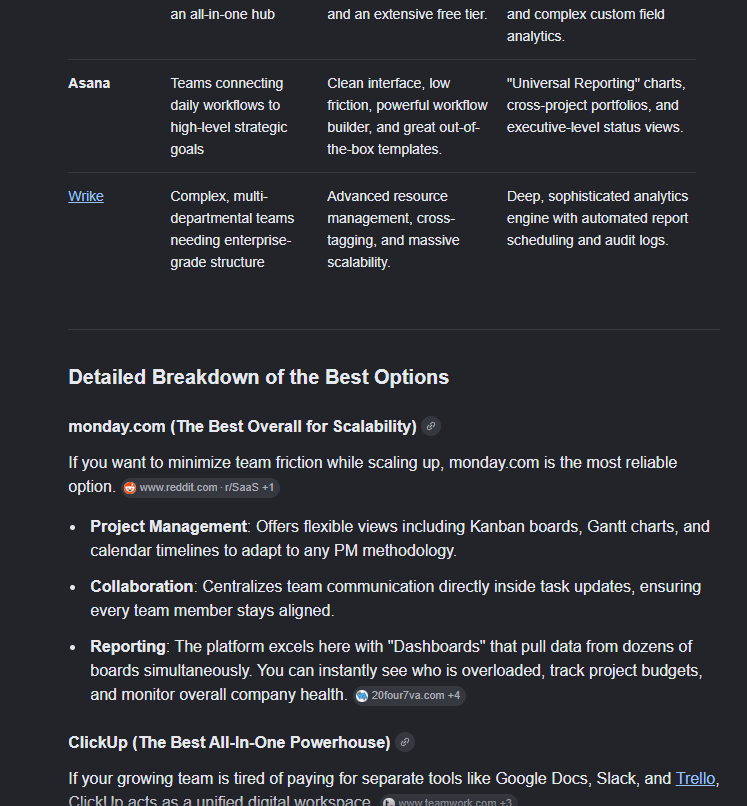
For example, when you type in Google’s AI mode for a query, the model searches for different sources and provides specific responses with the help of query fan out.
Compared to the traditional search and AI Overview, it is up to the reader to explore further and make their decision. :
Why Does Query Fan Out Matter for Your SaaS Business?
Think about how your ideal customer actually searches. They don’t just type “best project management software” and call it a day. They follow up with pricing questions, feature comparisons, “vs” searches, and reviews.
When someone asks ChatGPT, Google’s AI Mode, or Perplexity a question, the system doesn’t just pull one answer from one place. It breaks the query into a cluster of related sub-questions and pulls information from multiple sources at the same time.
So if your SaaS content is only targeting a single keyword, you’re essentially showing up at just one result while your buyers are looking at the other ten.
The real kicker for SaaS brands is that you don’t just need to rank for one query. On the contrary, you need to show up across comparison pages, pricing discussion, and review searches. If you miss one of these angles, you may miss AI visibility too.
The solution: The old approach – choose one primary keyword and build a topic cluster that answers three, four, or more sub-questions. This way, AI is more likely to extract information from your content and identify you as a relevant, authoritative source to cite.
How to Optimize for Query Fan-Out
To optimize for query fan out, you need to focus on writing content on related queries and different search intents. In addition to the LLMs SEO optimization, here is what you can do:
1. Build Topic Clusters
Topic clusters are pages that are connected to each other to support the core topic. They are the most effective ways to build topical authority.
First, you need to identify the core topic, so you can build related terms around it. For SaaS, you can start with topics related to your business and what you offer.
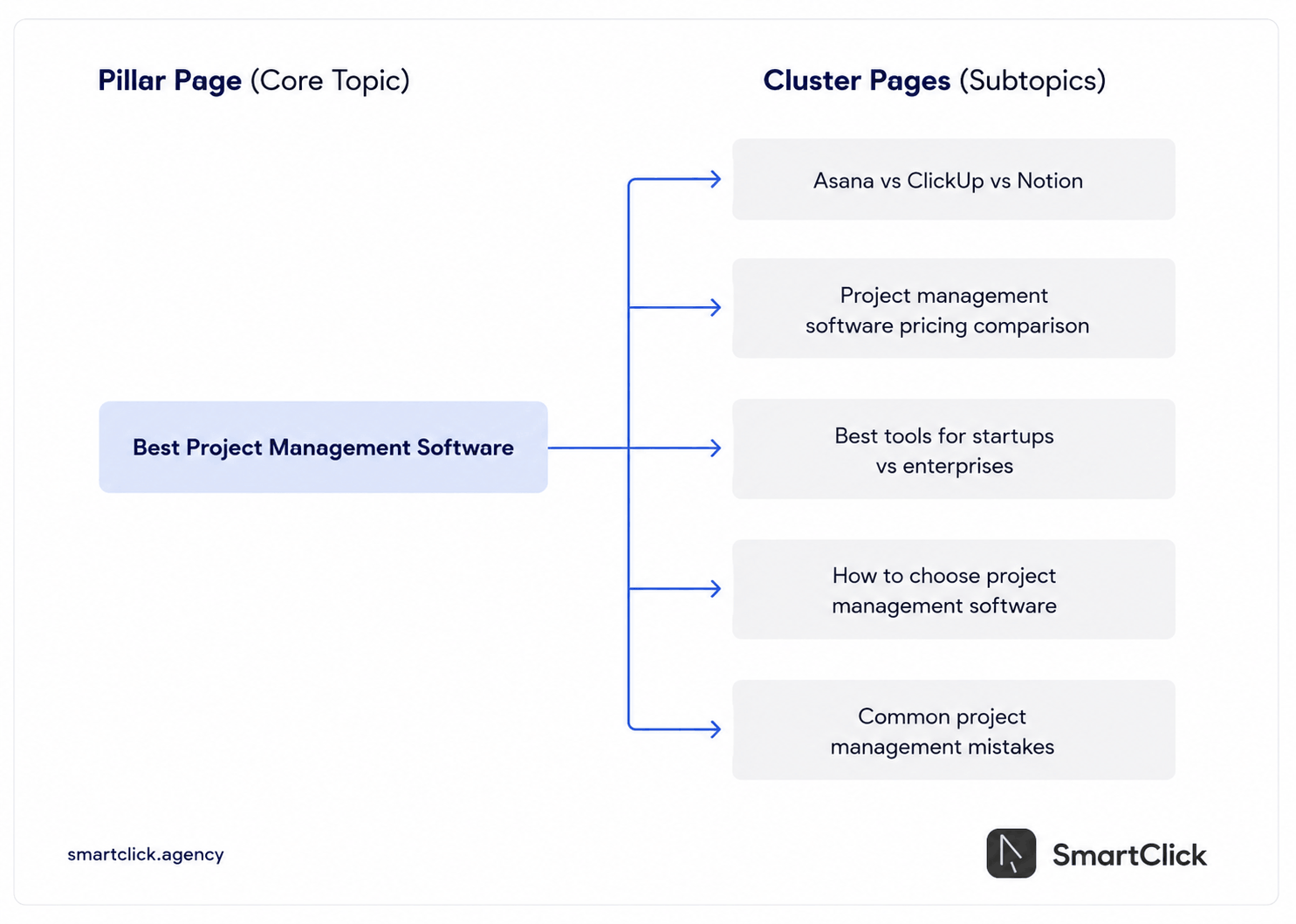
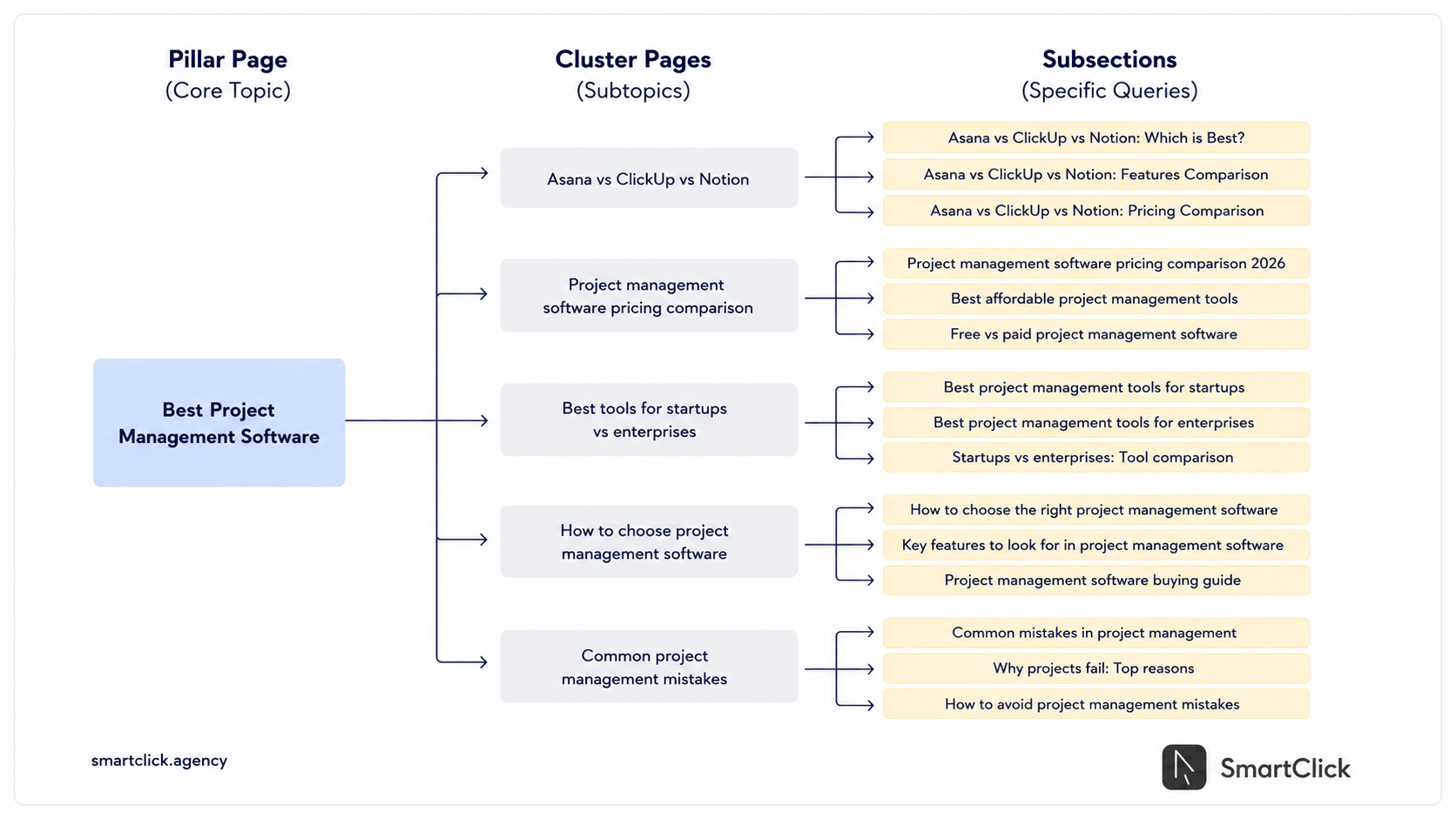
Next, use the core topic as a main pillar page, and start creating related subtopics to address multiple queries that can be generated through relevant query fan-outs. This way, you will improve your chances of being mentioned in AI responses.
For example:
Pillar page: “Best Project Management Software”
Cluster content:
“Asana vs ClickUp vs Notion”
“Project management software pricing comparison”
“Best tools for startups vs enterprises”
“How to choose project management software”
“Common project management mistakes”
2. Create High-Quality Content
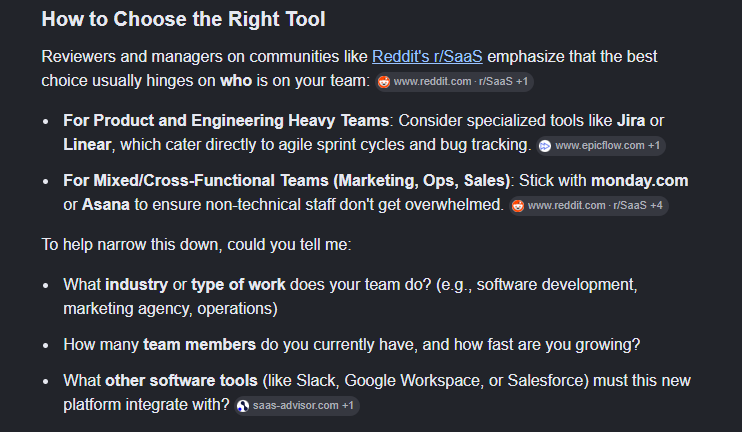
Create comprehensive, accurate, and helpful content that will answer all those sub-related queries that will show from query-fan out.
Here’s how it looks in practice:
To identify these specific queries, you can do several things, including:
Conduct Keyword Research: Identify related terms your audience uses when searching for your service or product. Use tools like Ahrefs, GSC, and similar.
Analyze the Competitors: You don’t need to reinvent topics or keywords. Instead, review your competitors’ high-ranking pages and identify the key subtopics they cover, especially within their H2 sections or FAQs.
Explore Communities: Discover related terms on forums like Reddit or Quora, to find out similar questions that will help you create your content. They contain real, human questions, which AI models favor.
After finding related queries, to optimize for fan-out, focus on these several key points:
Answer Questions Directly: Provide an immediate answer before explaining the topic. This delivers value to users as well as to AI models, so their bots can easily find your answer, understand your content, and cite the page as a source.
Optimize Content Structure: Use H2s and H3s respectively. These subheadings should be related sub-queries like: “Free vs. Paid Management Software”, or “Project Management Software Buying Guide”.
Write In-Depth: Don’t just scratch the surface. You need to write your content in depth, demonstrating your expertise and knowledge in the niche. You can add supporting data, case studies, or related examples to support your content. LLMs favor unique perspectives because they show you are an expert in your industry, which improves the chances of being cited and mentioned.
3. Use Schema Markup
LLMs and AI bots understand your content through schema structure. Implementing different types of schema markup will help them know what your content is about. And this reduces the time AI spends processing your content.
LLMs use natural language processing (NLP) to understand your content. This means that if you write your content in a more natural, simple, and clear way, the chances of appearing in AI responses are high.
To write for NLP, pay attention to the following tips:
Write in Clear Language: Avoid fluff, low-value content, and jargon as these can hurt NLP readability. Create natural, conversational text where each sentence is structured with clarity and context.
Keep Your Ideas Short: Create logical, concise content fragments that LLMs can extract, analyze, and use for fan-out.
Use Synonyms: Don’t use the exact keyword or phrase all over your content. Try using semantic variations of the main keyword and include it naturally in the text and headings.
Use Q&A: Structure your content in a Q&A format where possible. This style keeps your content concise and direct. And it is the simplest win for NLP, as it mirrors how your customer finds you on LLMs.
Write in Self-Contained Sections: Write your idea in a short, simple section that AI can understand on its own, easily process, and summarize in AI responses. Use full sentences to ensure clarity and consistency.
How to Measure Query Fan-Out Performance
Tracking LLMs visibility, as well as measuring query fan-out performance, are the main pain points for SaaS brands. In traditional search, ranking higher means appearing among the top 10 links on the SERP. With LLMs, however, “ranking” shifts to being AI visible.
However, to effectively measure query fan-out, you need to look beyond keywords and understand how answer engines work.
For this matter, start with these several steps:
1. Identify Gaps
Before you can fix anything, you need to run a content audit for SaaS to identify where you’re invisible. You need to discover where your brand is being mentioned and cited, and where it’s not.
If you rank organically for a term but fail to appear in an AI response, that’s a strong indicator that your content is missing the comprehensive topical coverage the AI is looking for.
A quick way to start? Go to Perplexity or ChatGPT, type in your core SaaS use case, and see whose name comes up. If it’s not yours, that’s your gap.
2. Reverse-Engineer the Sub-Queries
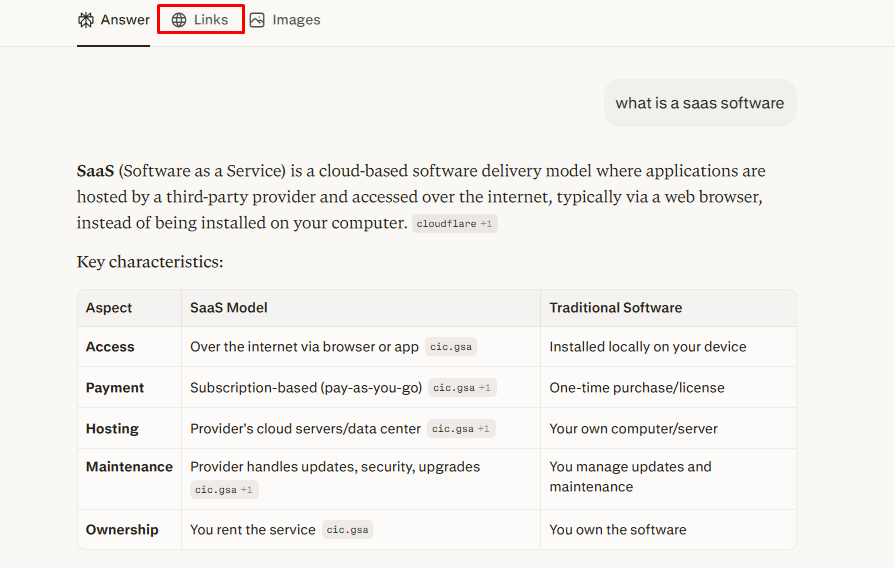
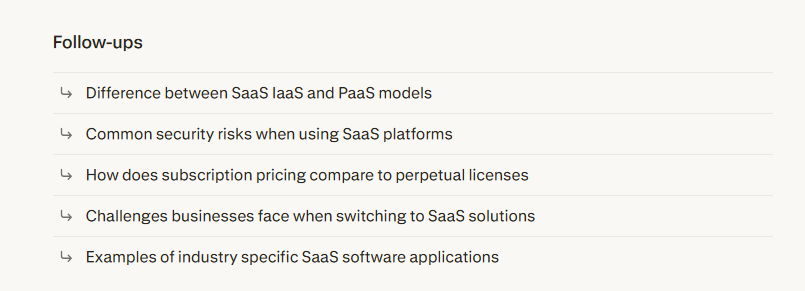
Go to Perplexity or Gemini, enter your target prompt, and click the “Links” tab to review which pages are being cited. You can also check “Follow-up” terms at the bottom to see what sub-queries Perplexity associates with your topic.
This is your quick win to be mentioned in AI responses.
Place them naturally in subheadings if possible, or include them isolated in your FAQ section.
3. Monitor Consistently
Your competitors are publishing new content and winning new citations every week. So analyze them and broader terms constantly, not just once. Analyze which areas your site is missing, where your content needs improvement, and how to better structure your SEO strategy.
Start Optimizing for Query Fan-Out
To optimize for AI visibility, you need to understand what query fan-out is and how LLMs work behind the scenes. Instead of ranking for just one keyword, you need to tailor your strategy around the many related questions, comparisons, and decision-making paths your audience explores.
And if you are new to this, or just want to improve your content, our team at SmartClick will help you with every step. With our AI SEO Services, we combine technical SEO, content strategy designed for query fan-out, topic clustering, and AI search optimization strategies to help your SaaS company become more visible across LLMs.
FAQs
What is query fan-out for SaaS?
Query fan-out for SaaS is the process where AI systems break down a single query into multiple related sub-queries to improve the quality of their responses. For example, “best CRM for SaaS startups” – into multiple sub-queries covering pricing, features, comparisons, and integrations.
How to optimize my content for query fan-out?
Start creating topic clusters around your main pillar page. Write high-quality, accurate, and comprehensive content that AI models will understand, process, and generate into AI answers. Include schema markup properly, as this is the easiest way LLMs understand what your content is about. Also, write in a more natural, conversational way that mimics how your customer finds your service or product in AI search engines.
What is the difference between query fan-out and traditional keyword search?
Traditional keyword search matches one query to a ranked list of pages, while query fan-out has AI systems breaking down one query into multiple sub-queries simultaneously to generate a single, synthesized answer.
Which AI search platforms use query fan-out?
Query fan-out is used by all major AI-powered search platforms, including Google AI Mode, ChatGPT, Claude, and Perplexity. Google’s AI Mode is one of the most popular platforms, as it delivers more specific, in-depth, and decision-making answers.
Let’s Solve Your SEO Challenges and Bring You Traffic That Converts
Book a free consultation today to learn how we can help you attract more of the right traffic and turn it into qualified leads for steady growth.