Listen to the audio version of this article (generated by AI).
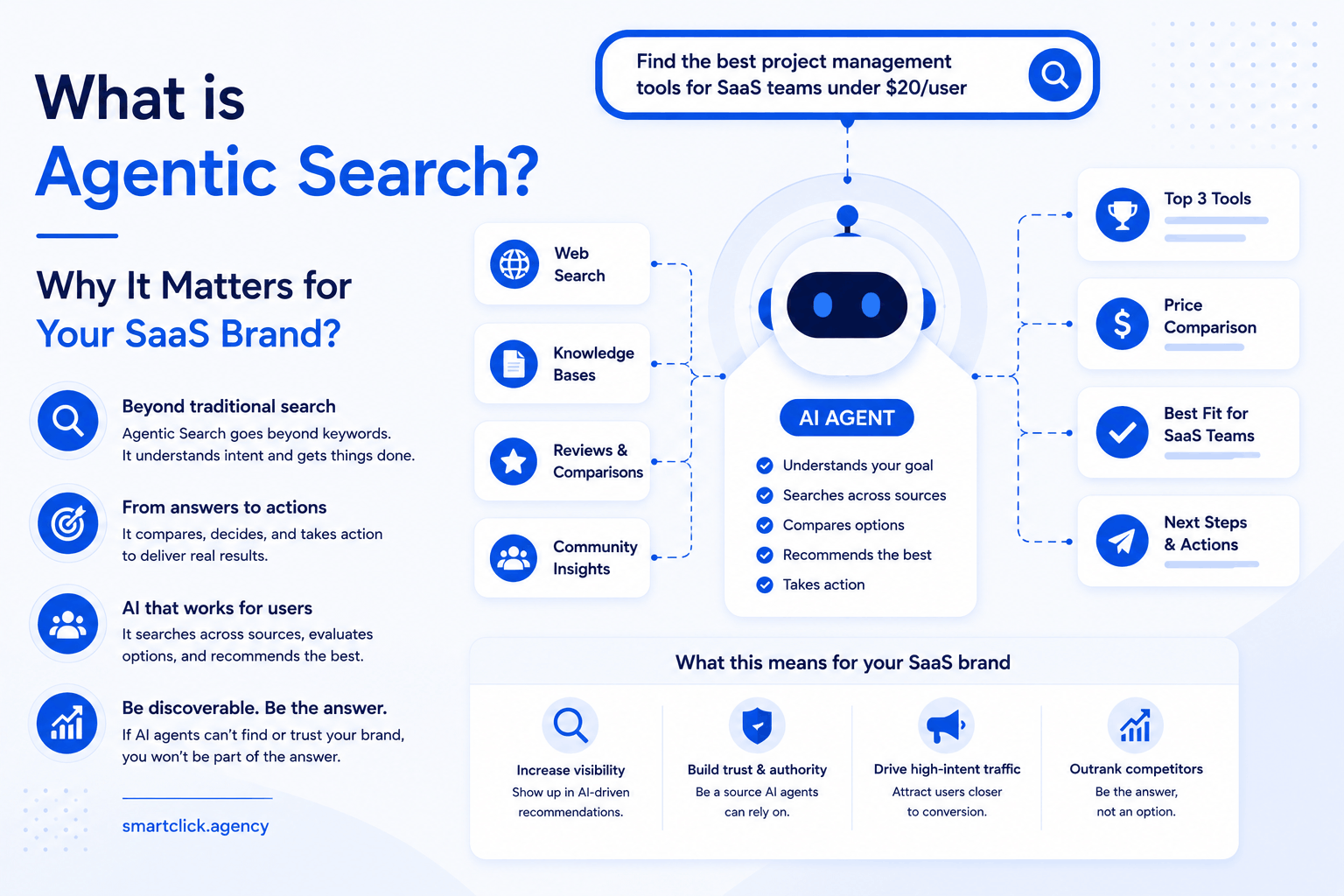
Agentic search and agentic AI are now redefining how we connect with our customers, interact with information, and automate complex tasks. People no longer Google and click; they tell an AI agent, “find me the best SEO management tool”, where the agent analyzes, compares, and lists the best solutions.
This matters for your SaaS specifically, because it already involves research, comparison, trials, and demos, which are exactly the tasks agents are built to automate.
So, we will explain everything you need to know about what agentic search is, why SaaS brands can’t ignore it, and how to make your brand appear in agentic search.
What is Agentic Search? A Simple Definition
Agentic search is the process where the AI agent researches, evaluates, and acts on behalf of the user.
Agentic search isn’t the same as AI Overviews or chatbot answers – it’s AI that acts, not just answers. So, rather than generating just a simple answer, it deeply understands the user’s intent and behavior.
Think of it like this: AI gets a query, breaks it down into related sub-queries, analyzes them from different sources, cross-references what it finds, and synthesizes answers from multiple sources to provide a comprehensive response. This is called a query fan-out process.
Why Agentic Search Matters for Your SaaS Business
SaaS usually involves a lot of research, like comparing features, testing free trials, checking integrations, comparing prices, and so much more.
AI agents can make this process much faster by doing the research automatically. Since many B2B teams already delegate research, using AI agents is a natural next step. Therefore, here’s why it matters for your SaaS:
Your buyer may never land on your page. With AI search, GEO for SaaS is an inevitable part of your SEO strategy. If a user asks an AI agent, “find me the best 5 CRM tools”, the agent starts researching, comparing, and shortlisting the best tools as the final answer. No page visit, no clicks.
Improves your AI visibility. With agentic search, if an agent decides you’re a good fit during its research phase, it increases the chances of your brand being mentioned in the final recommendation. The zero-click search optimization improves your LLM visibility.
AI sees the whole picture. Agents don’t just check your site. They cross-reference business directories, forums like Reddit, and how your brand appears online. If your pricing page says one thing and a review site says another, that contradiction can make an agent hesitant to recommend you, even if you’re actually a great fit.
If AI can’t read it, it may not exist. Your main focus should not be “can a human find this page”, but “can an agent actually parse it.” Agents don’t browse the web the way people do. So, if your content is hidden in a PDF file or lacks structured information, the agent may skip it entirely.
How Agentic Search Actually Works
In simple terms, agentic search follows these steps:
Receives a query goal
Breaks down into multiple related sub-queries
Searched multiple sources (your page, review platforms, community signals, third-party)
Evaluates the findings
Synthesizes an answer
Takes action
The agent provided only 3-5 best tools, but evaluated multiple tools. The ones that didn’t make a good fit were filtered out before the user even knew they existed.
Agentic Search vs Traditional Search: What’s the Difference
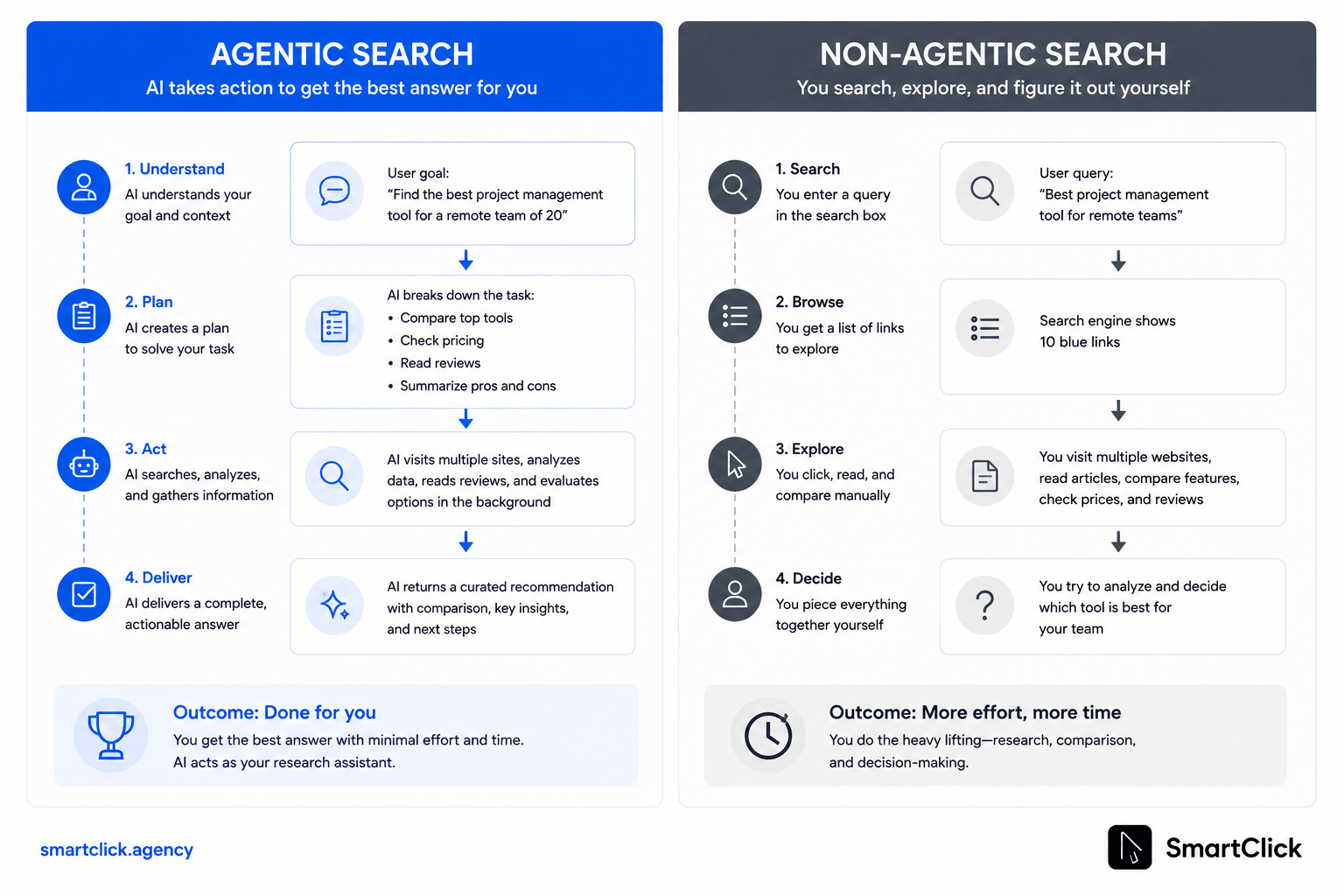
Let’s see the main difference between the agentic and non-agentic search.
As you can see from the image, the non-agentic search is what a human search actually looks like. More time, more effort, and everything done by yourself.
On the other hand, in agentic search, the AI agents do all your job behind the scenes. They understand, analyze, evaluate, plan, and deliver the best answer.
How to Make My SaaS Brand Appear in Agentic Search
Here is the part when you need to be practical and improve your SaaS SEO strategy.
Analyze Your Consistency
Check your features, pricing, and services across all platforms where your brand is mentioned, including business directories, community forums, and comparison articles.
Make sure there is no mismatch between what you say on your website and what appears on the other pages online. Even small differences or outdated claims can create confusion for AI agents.
Tip: Make this a regular part of your workflow, because outdated information can still appear on third-party sites after you’ve updated your own content.
Create Pillar Pages
If you don’t have ones, start creating pillar pages and content clusters. Pillar pages act as a central hub for a topic cluster, establishing your topical authority.
They are detailed content pieces that fully answer main questions: what you do, what your service or product is, how it can help, why it is better than other solutions, what the costs are, and what your buyers say about you.
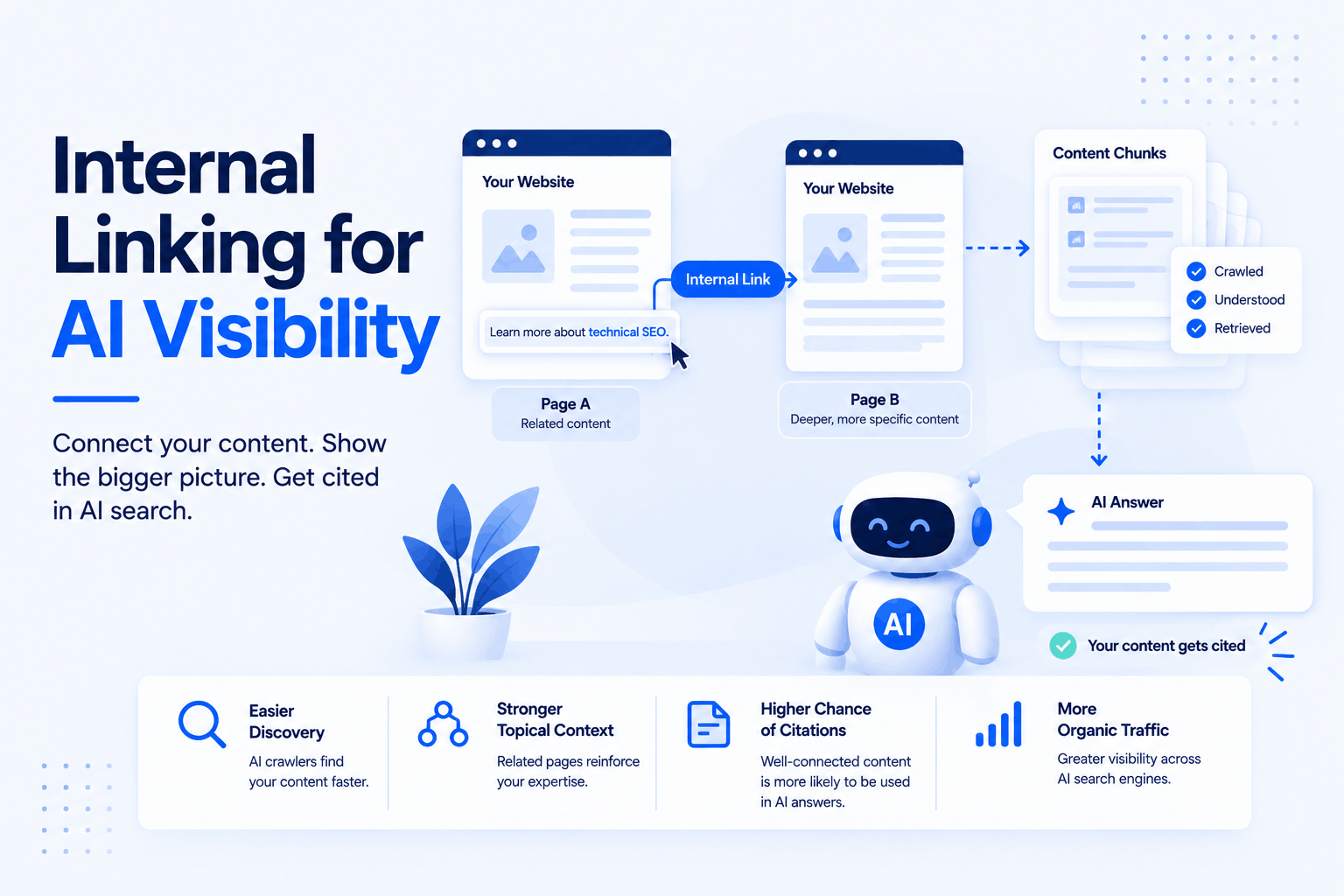
Followed by that, content clusters are sub-related queries from the pillar pages that can link to each other and to the main pillar page, strengthening the internal linking strategy.
This structure also helps agentic search systems understand your site more clearly, because agents rely on well-organized, interconnected content to evaluate relevance and authority for generating answers.
For SaaS, it looks like this:
Pillar page: “Complete Guide to Project Management Software”
Content clusters: “How project management tools improve team productivity”, “Asana vs Trello vs Jira: key differences”, “How to choose the right project management tool for your remote team”, etc.
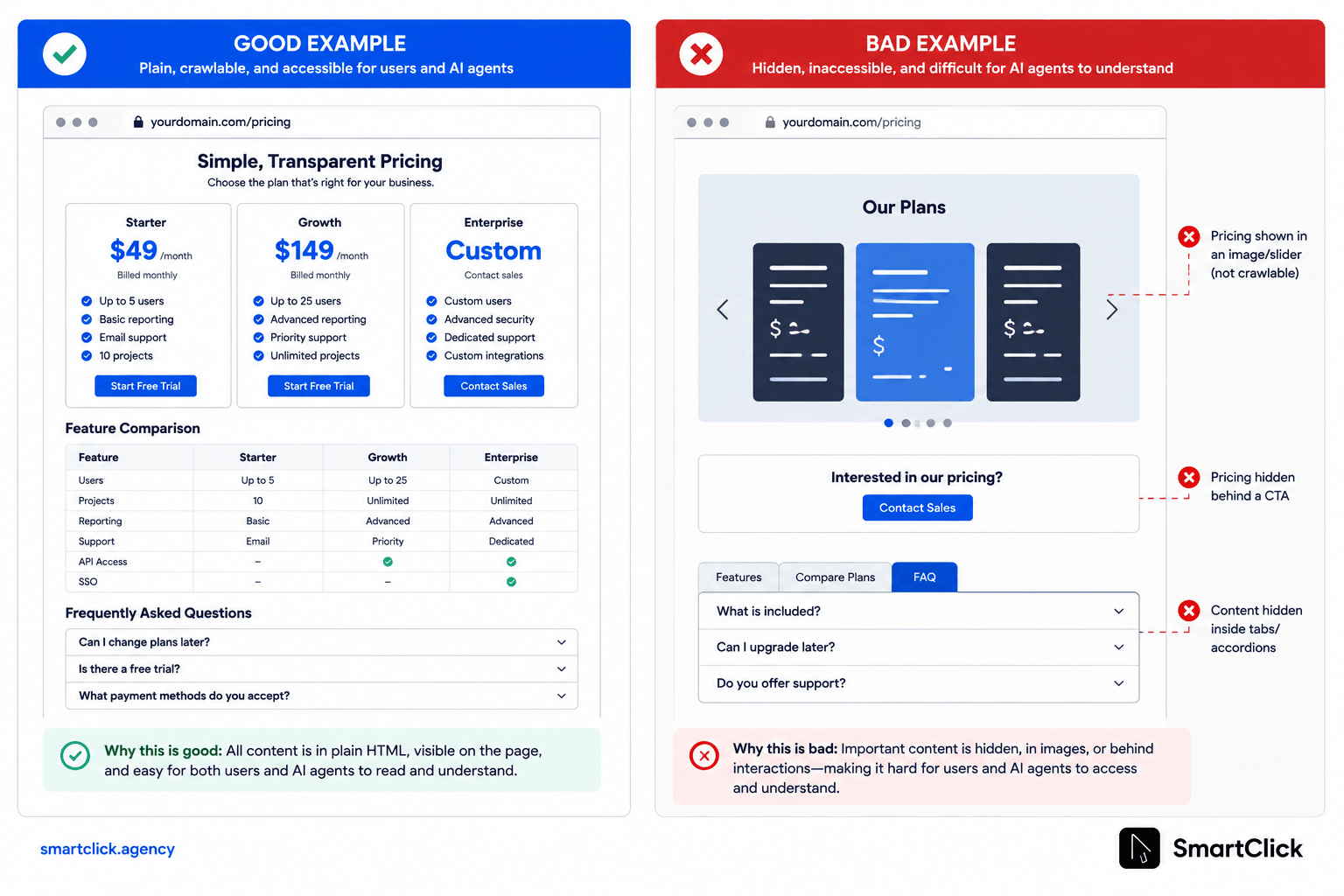
Check Your Accessibility
Have a plain, crawlable version of your plans and tiers somewhere on the page. Make sure your pricing, feature comparisons, and FAQs are in plain HTML so both users and AI agents can read and understand them without barriers.
Ask Happy Customers for Reviews
“Good service, great team” is not a proper review. It’s vague, and AI agents can’t understand what your product is about. Ask your satisfied customers to leave feedback, mentioning the case, the problem, and how your team approaches.
When you ask for reviews, be specific about what you’re asking for. Most customers are happy to give details. You can say:
“What problem were you trying to solve before using us?”
“What changed after you started using our product?”
“Which feature or part of our service was most valuable for you?”
“Are you satisfied with the team’s strategy?”
Detailed, structured reviews help both future buyers and AI systems better understand your product’s real value.
Check Your Access Logs for AI Crawlers
Your server logs capture all requests to your site, including traffic from AI crawlers.
Common AI crawler indicators include:
GPTBot (OpenAI)
ClaudeBot (Anthropic)
Google-Extended (Google AI training crawler)
CCBot (Common Crawl)
PerplexityBot: Perplexity’s crawler
Look for:
How often do they visit your pages
Which pages are they accessing
Unusual crawl patterns
This data alone won’t tell you whether AI agents will recommend your page or not. This will indicate which pages are properly accessible to AI systems and which may be ignored.
For example, if an AI crawler requests a page and receives a 404 Not Found, it generally means:
The page does not exist or is not accessible
The crawler cannot use that URL for training or indexing
That specific content is effectively excluded from their dataset
So, the agent struggles to analyze your page, leaving it behind.
Monitor Your AI Performance
Always track how well your brand performs in AI search.
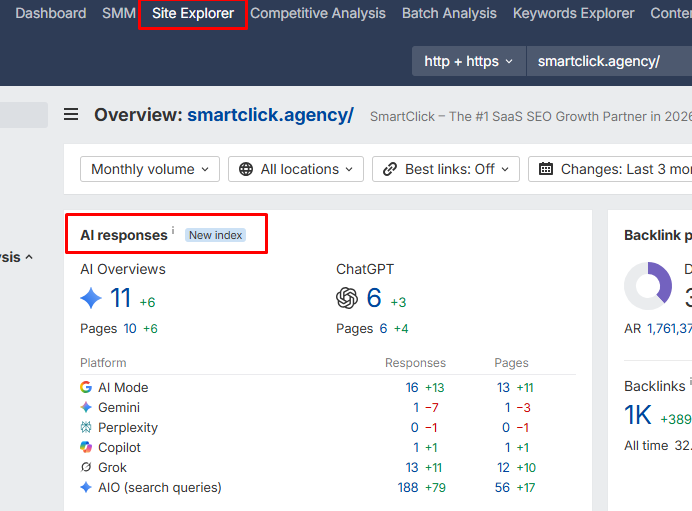
You can do this manually by searching for a query your buyers would use. Or by using SEO tools like Ahrefs, and tracking how well your page is cited by LLMs.
Tip: To get the whole picture, document the results. This way, you will identify any gaps and opportunities.
Agentic Search and AI for SaaS 2026
As zero-click search is evolving, complex tasks will become more common. As a SaaS business, you need to be prepared for the agentic search as your business already includes complex tasks such as signing up for a tool, buying a service, requesting a demo, etc.
But, first things first – know where your brand is positioned. You will maximize your resources and unlock a new level of efficiency and productivity. Many tools can help you track your brand AI visibility across multiple platforms. But if you want to execute faster and avoid being overlooked, take a look at our AI SEO services to get your site ready for agentic search.
FAQs
What is the difference between SEO and agentic search?
SEO is about ranking for a specific keyword, while agentic search is about an AI agent researching, comparing, and acting on your behalf. Not just finding a list of clickable links.
Will agentic search replace SEO for SaaS companies?
No, you still need solid SEO fundamentals. With agentic search, in addition to your SEO strategy, you now optimize for AI visibility. The combination of both always works the best.
How do I know if AI agents are already evaluating my SaaS product?
Check your server logs for crawlers like GPTBot, PerplexityBot, and ClaudeBot, how often they visit your page, which pages they analyze, and what they return.
Is ChatGPT an agentic AI?
It depends on what it’s doing. A basic ChatGPT answer to a question isn’t agentic; that’s just generative AI search. But features like its deep research mode or task automation, where it plans steps and acts with less input from you, can function like an agentic AI.
Let’s Solve Your SEO Challenges and Bring You Traffic That Converts
Book a free consultation today to learn how we can help you attract more of the right traffic and turn it into qualified leads for steady growth.