Listen to the audio version of this article (generated by AI).
Have you already seen some traffic from ChatGPT? Maybe even got some leads from Gemini? That’s what many SaaS brands are noticing: AI visibility is no longer just another trend that will vanish in a month.
The SEO space has been talking about AI search optimization for a couple of years now, but it’s still one of the hottest topics. And link building strategy is one of the most debated parts of it.
Some say it’s dead. Others say it has become even more important. Who should you trust? No one but the data and facts… And these are the two things we’ll cover in this guide.
Does AI Care About Backlinks?
Yes, backlinks are still important for your traditional SEO and generative engine optimization. If you think about it, the results you get in any search (AI included) aren’t random. But if they aren’t random, what are they based on?
As before, they’re based on relevance and authority. That’s why backlinks still matter because they help you strengthen both.
So, if you’ve been working with a link-building service, using LinksManagement, or building backlinks yourself, keep doing that. Just make sure you’re focusing on trustworthy websites that are relevant to your niche.
What Has Changed, Then?
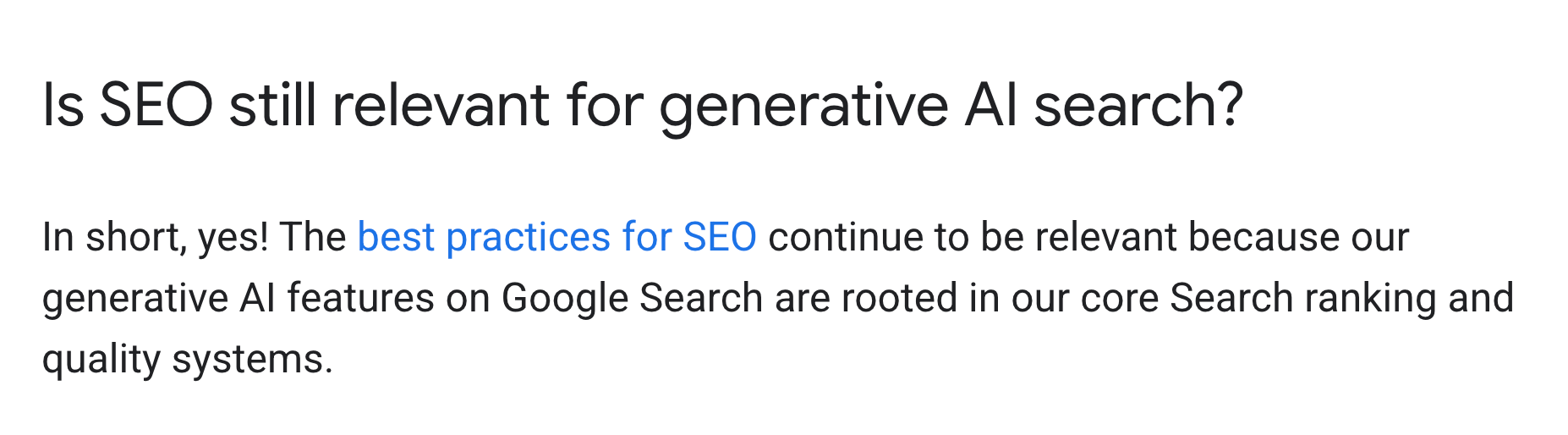
If you look at Google’s official guidance on AI visibility, you’ll see that SEO best practices are still a must.
Source: Google Search Central
What has changed, then?
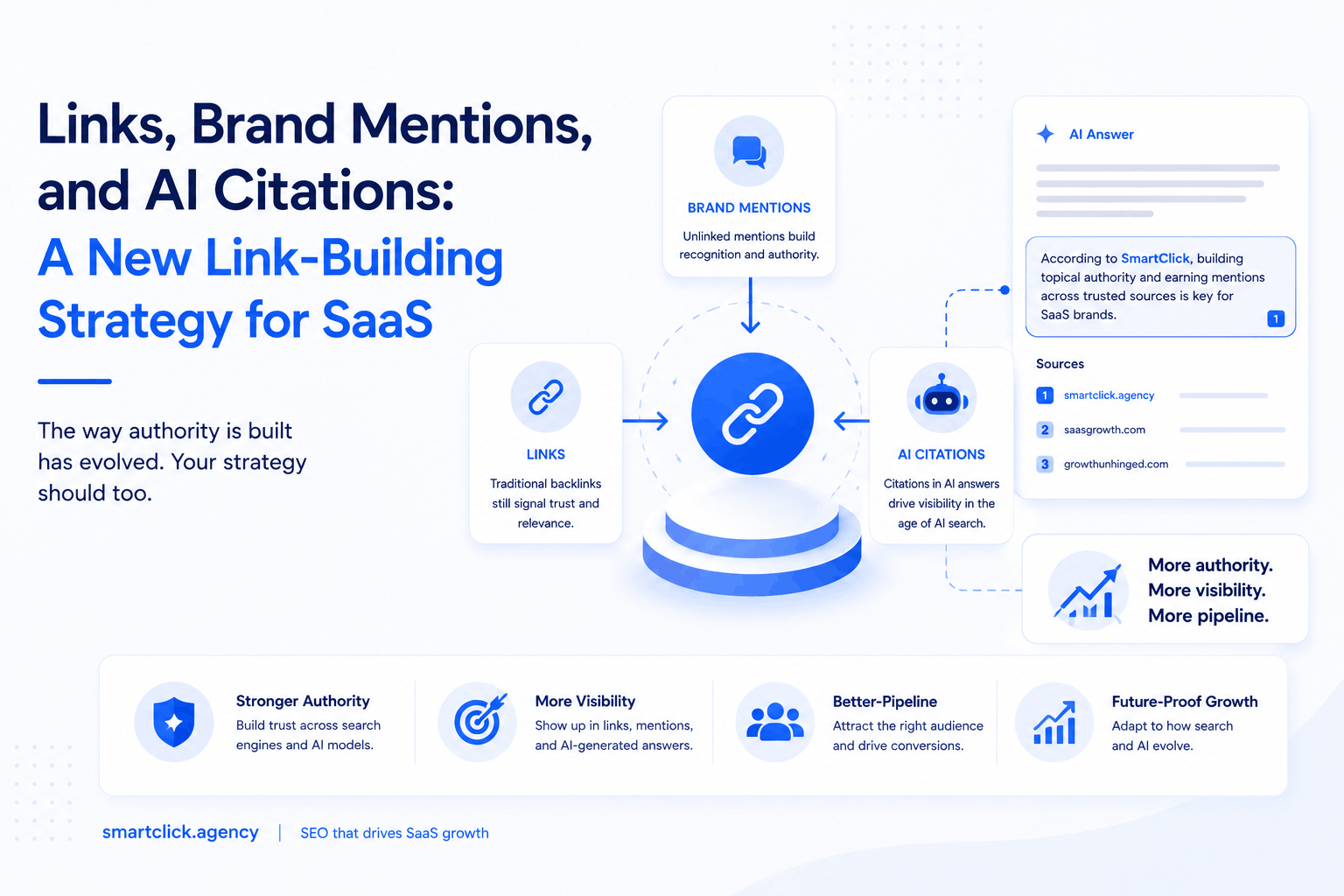
The main shift is that backlinks are no longer the only thing that matters. If you want to be visible in LLMs and other AI systems, you have to look at the bigger picture. LLMs and AI systems pay much more attention to the brand image and broader visibility.
So, if you want people to discover you through AI search more often, pure link building might not be enough. Ideally, you want to gain more exposure through:
Backlinks: These are your usual links from other websites.
Brand mentions: This is when anyone mentions your business online. It can be a post on social media, a Reddit comment, etc. When it comes to ChatGPT and AI Overview citations, even unlinked brand mentions count, as they strengthen your topical relevance and brand recognition.
Citations: This is when someone cites your content or quotes your team member (e.g., according to X report, X expert, etc.). When you get citations, it means that someone trusts your posts. They’re not just acknowledging that your brand exists. They find your content interesting and credible enough to cite.
As you can see, brand mentions vs. citations vs. backlinks isn’t a battle because you need all of them. Essentially, these days, link building is closely connected to digital PR, content marketing, community management, and even SMM.
But it’s not about getting any random mentions all over the internet. The idea is to build topical authority through all that diverse exposure.
What Doesn’t Work Anymore?
Mostly, the things that never really worked: spammy, low-quality, and random links.
Even though every single link-building guide has always told site owners to stay away from shady tactics, many people still used them. And let’s be honest, some were even getting decent results.
But these days, both traditional and AI search visibility depend on your digital authority. And cheap backlink packages won’t help you much. They might deliver some short-term results. But in the long run, they’ll do more harm than good.
7 Things to Prioritize for AI-Focused Link Building
The general rule is that link building for generative engine optimization has to focus on high-quality visibility beyond your own channels.
But how can you do that practically? Let’s take a look at seven effective and easy-to-implement tactics.
1. Build High-Quality, Contextual Links
If you’ve done white-hat link building before, this is the strategy that has always worked and continues to do so. Yes, it’s more complex than getting links from random “write for us” pages. But it’s what pays off.
When choosing a linking domain, pay attention to these details:
Relevance: Your goal should be to create topical relevance and become a trusted voice in your industry. And an important part of that is getting backlinks from relevant websites in your niche.
SEO metrics: Of course, checking things like DA/DR, traffic, and spam score is important. Still, it’s only one of the elements. So, for example, if a website has great SEO metrics but is irrelevant, it isn’t the best choice.
Low-quality content: If the website posts sloppy AI-generated or plagiarized articles, this isn’t the best referring domain.
Poor user experience: There are some websites that literally throw tons of ads and pop-ups at you before you can even read the title. This means that they likely don’t care much about their users. And it often shows that this site probably won’t age well.
Traffic over time: When assessing SEO metrics, don’t look at traffic as a single number. Instead, check its trends. How has it changed over the last several months? If the traffic is consistently dropping, it isn’t a good sign.
Incoming vs outgoing links: If a website has more outgoing links than incoming links, this likely means it’s spammy.
Once your link-building strategy is based on these backlinks, you’ll actually strengthen your topical authority. And this is one of the key steps toward gaining search visibility in traditional and AI search engines.
2. Get More Relevant Brand Mentions Across the Web
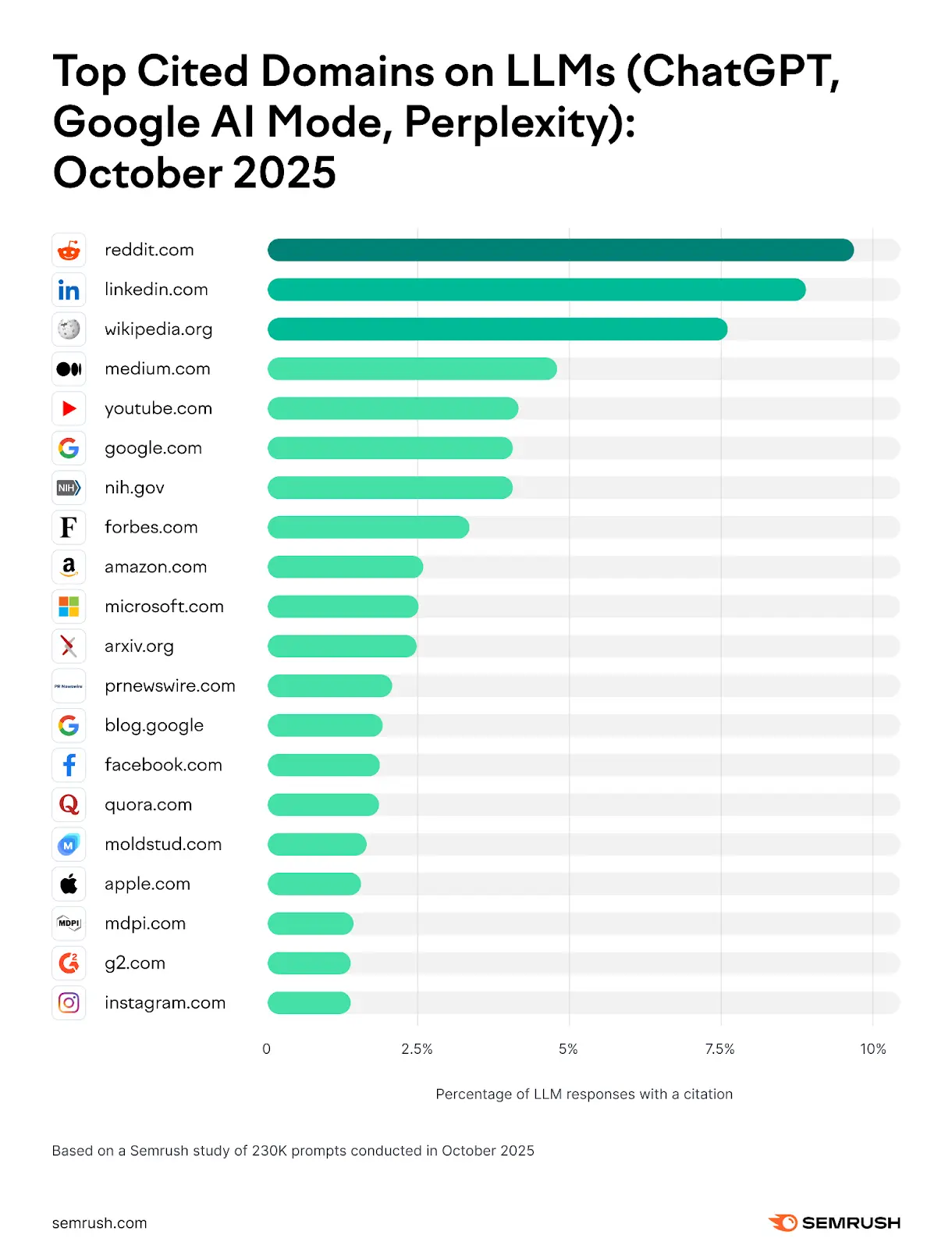
Don’t focus on links alone. Unlinked mentions also contribute to AI visibility when they’re relevant to your niche and come from trusted pages.
Of course, you don’t have to show up on every single one of them. But when your brand repeatedly appears on these sites in a relevant context, your chances of showing up in AI search increase.
Source: Semrush
The idea isn’t to get links from all those pages at any cost. It means joining relevant conversations organically and creating authoritative content that people want to share and discuss.
3. Do Digital PR
Before AI search, digital PR mainly helped your digital reputation, brand recognition, and visibility. It could indirectly influence SEO. But still, most of the links you got were nofollow, so there was mostly no serious boost in rankings.
Now, the situation is different. When you get more cross-platform visibility in your niche, AI systems associate your brand with a particular topic.
As a result, your LLM visibility can improve. But this only works when your PR is closely connected to what you actually do. So, you can focus on the following:
Trustworthy industry publications,
Awards in your niche,
Event participations and sponsorships,
Relevant partnerships,
Activities that involve your founder and team experts (expert quotes, speaking opportunities, webinars, podcasts, etc.).
4. Show Up in Listicles
Lists of the best/top tools have always been a big part of SaaS content marketing. Showing up in them meant getting more referral traffic and helping more people discover your brand.
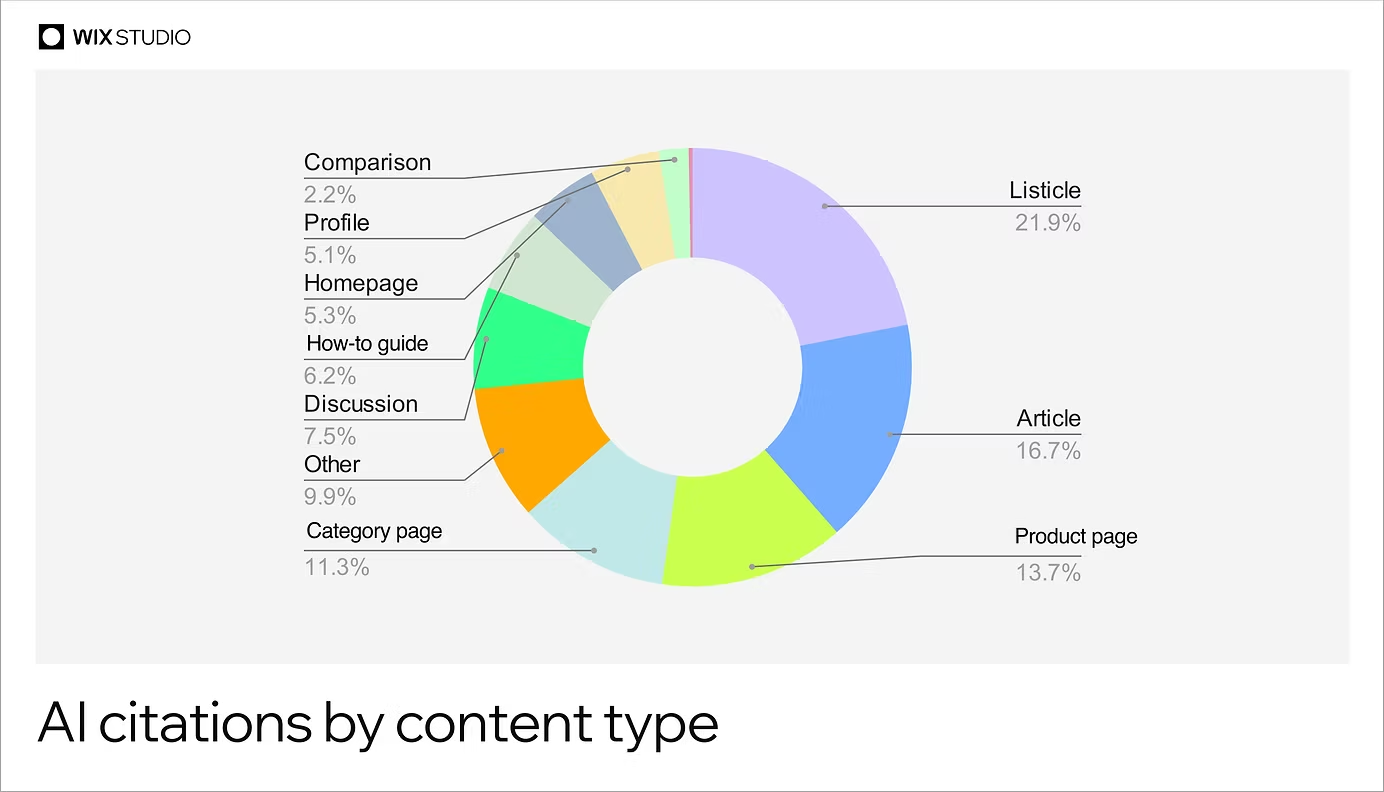
But now, there is another advantage: AI citations, as listicles are one of the most cited content formats in AI systems.
Source: Wix
The idea, though, isn’t to show up in as many listicles as possible. Not at all. Your goal is to:
Find relevant pages that your target audience would actually search for. Usually, these are based on your target keywords, like “best referral software,” “top project management tools,” etc.
Shortlist those that come from credible websites and have great rankings. Ideally, you want to get included in listicles that rank on the first page in Google.
Reach out to website owners and ask to be included. This is where you really need to master your cold outreach because most pages won’t be interested right away.
5. Create Profiles on Review Platforms
Before, having profiles on review platforms wasn’t a must for SaaS SEO. It was essential for trust and the customer journey, but not necessarily SEO. Yet, with AI search, they have become much more important.
The thing is that LLMs often pull information from platforms like Clutch, G2, Capterra, and so on. If you think about it, it’s a pretty smart choice because these websites are credible and have real user reviews.
As a result, AI systems may see your brand as more trustworthy when you show up on these websites. So, the simplest thing you can do is to:
Choose a couple of these platforms (check where your competitors are as well),
Create your profiles or claim them if they already exist,
Encourage your users to write reviews.
6. Build Organic Community Visibility
Brand recognition and visibility are very important factors for AI search optimization. And no matter how much you try, you can’t buy your way into it. Sooner or later, you’ll have to build some organic channels where people talk about you naturally.
Some of the best channels here are social media platforms and forums (including Reddit and Quora). And these are the tactics you could consider using:
Participate in niche discussions: Find relevant discussions online and be genuinely helpful (not spammy or promotional).
Use Reddit: Create a Reddit account for one of your technical experts (or maybe even the founder), and answer questions in your niche. It’s better to be transparent about working for a particular company. Reddit users will appreciate your honesty.
Encourage UGC: When your clients are satisfied with the product, ask them to film a short video where they share their experience. Alternatively, they could write a LinkedIn post or choose whatever format feels most natural to them. Just don’t make it promotional. Let them share their actual experience.
Engage on social media: Don’t just post your own content in isolation. Instead, engage with your partners and customers. This can create a much deeper connection and form a loyal community in the long run.
Create your own community: Once you already have an active user base, consider creating your own community. The best approach is to make it useful and industry-focused rather than simply promoting your product. As for the platform, it can be anything from your own subreddit or forum to a Slack or Discord channel.
Even if your community efforts generate unlinked brand mentions, it’s okay. They still matter for your overall visibility and AI citations. So, avoid link spamming. The idea is to build a genuinely interested community around your brand, not just to get some links.
7. Build a Presence on YouTube
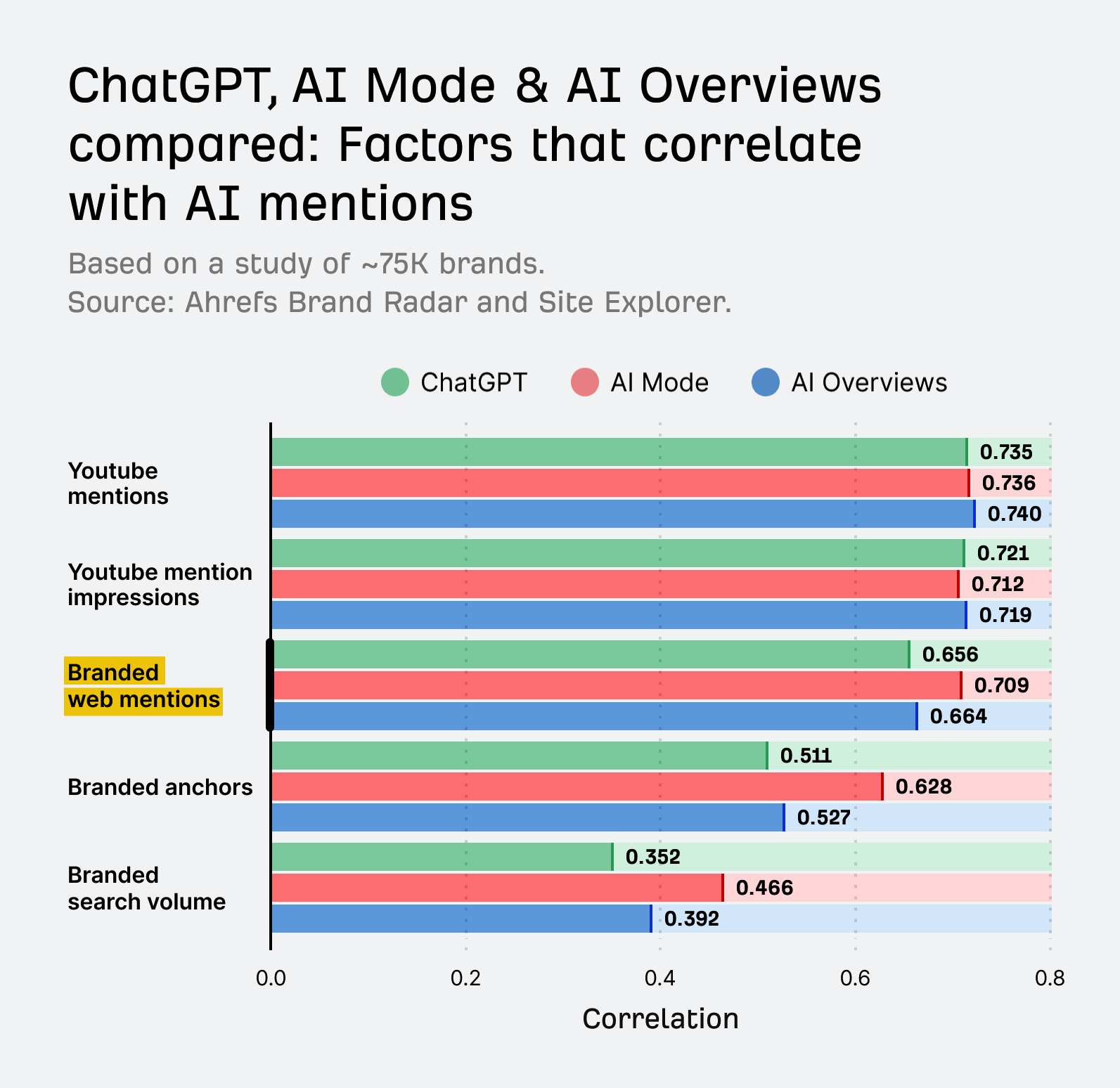
As you may have noticed in the Ahrefs research above, YouTube mentions have one of the strongest correlations with AI visibility. That’s why being on YouTube is important. But it doesn’t mean you have to simply start posting videos on your own channel. That’s great, but go further.
First, find relevant channels in your industry (even small ones) and make a list with some notes (e.g., does tool reviews, records SaaS podcasts, etc.). Next, reach out to them about the following opportunities:
Record a podcast or interview with someone on your team (you can even turn it into a tutorial or simply share some industry insights).
Get included in video comparisons/compilations (things like “X tool vs. Y tool,” “X tools for XYZ,” etc.)
Show up in video reviews (e.g., “I tested X tool for X days: Here is my honest review”).
The most important thing is that your brand appears in the title, description, or transcript. So, even if several videos only mention your brand casually, you can get more AI search visibility.
Conclusion
Just like traditional SEO, AI search optimization still depends on link building. Links help AI systems understand which sources they can trust.
The main difference is that now your trustworthiness doesn’t depend on links alone. It depends on the overall brand recognition and visibility. So, expand your link-building tactics to make sure your brand gets more exposure beyond your website.
Ideally, your SEO, marketing, and PR teams should work together for better results.
And if you don’t know how to start building your AI link-building strategy for SaaS, book a free consultation today.
Let’s Solve Your SEO Challenges and Bring You Traffic That Converts
Book a free consultation today to learn how we can help you attract more of the right traffic and turn it into qualified leads for steady growth.